- All
- Product Name
- Product Keyword
- Product Model
- Product Summary
- Product Description
- Multi Field Search


Views: 0 Author: Site Editor Publish Time: 2026-05-15 Origin: Site


Component reliability directly impacts product viability in today's demanding hardware markets. A failing power source easily compromises your entire device ecosystem. It quickly destroys brand reputation and consumer trust. Many hardware brands now shift from off-the-shelf power sources to direct OEM partnerships. They make this transition to tightly control manufacturing margins and custom packaging designs. It also lets them dictate specific discharge profiles tailored perfectly to their devices. Sourcing reliable components presents a complex engineering challenge. You need strict operational oversight to succeed in global markets. This guide establishes a clear framework for evaluating OEM manufacturers. We focus heavily on quality assurance and production scalability. We also prioritize verified regulatory compliance standards. You will learn how to choose partners based on strict operational merit. This approach proves much safer than evaluating suppliers by unit cost alone.
Evaluating an OEM supplier requires looking beyond per-unit pricing to total cost of ownership, factoring in defect rates, minimum order quantities (MOQs), and shipping logistics.
Strict compliance with international standards (RoHS, REACH, CE, IEC 60086) is a non-negotiable baseline for global market access.
Superior alkaline battery manufacturing is distinguished by advanced anti-leakage technology, raw material purity, and automated inline testing.
A structured prototype testing and facility audit process is essential before committing to a high-volume manufacturing contract.
Base per-unit pricing rarely tells the whole story during supplier evaluation. You must carefully factor in freight rates and complex customs duties. Unexpected tariffs can drastically alter your final financial calculations. Early failure rates introduce massive hidden expenses into your business model. Device damage due to poor manufacturing destroys brand equity almost overnight. You must evaluate the broader financial impact of your supplier choices. Smart buyers calculate every logistical expense before signing long-term agreements. They project potential warranty claims into their baseline budgets.
Establish an acceptable Quality Acceptance Limit (AQL) early in your negotiations. Standard industry practice often dictates an AQL of 1.0 for major defects. You must agree on these specific metrics before initiating any manufacturing runs. Align battery shelf-life guarantees strictly with your specific supply chain timelines. If ocean freight and warehouse storage take six months, your components need robust longevity. Recalls cause devastating financial losses for hardware companies. Preventing them requires stringent upfront agreements and clear warranty terms.
Every global region demands specific regulatory compliance for electronic components. Your chosen Alkaline Battery must meet local laws strictly. European markets demand tight chemical restriction limits under environmental directives. North American markets enforce different consumer labeling and safety testing requirements. Failing to meet these standards results in immediately blocked shipments at the border. You must verify market readiness thoroughly before initiating mass production. Request proof of successful market entry from your prospective suppliers.
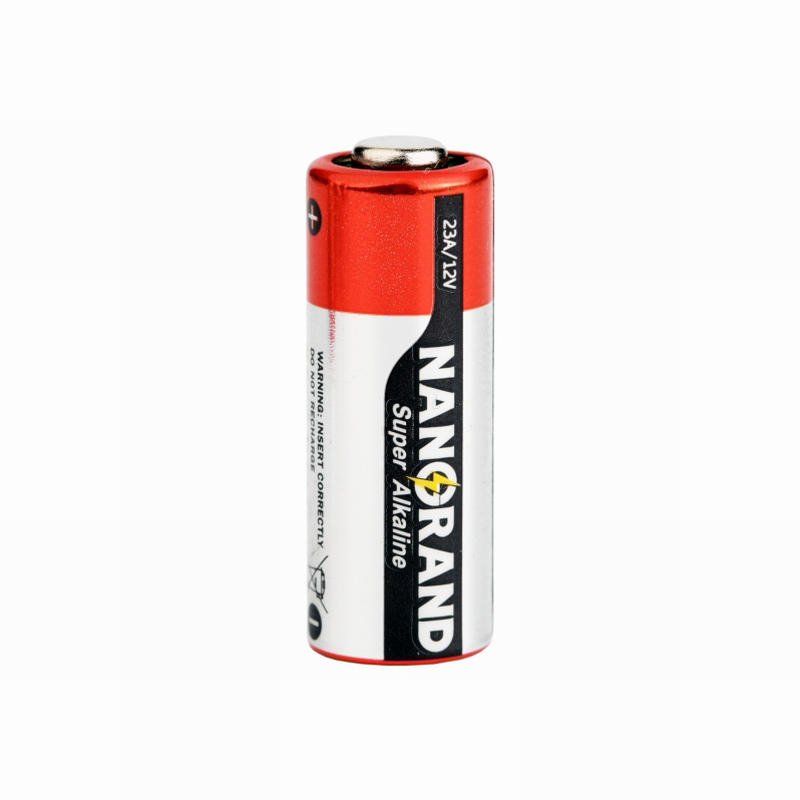
Evaluate the exact quality of Zinc and Manganese Dioxide inputs carefully. High-purity materials prevent microscopic internal short circuits within the cell. Material purity directly impacts overall discharge curves and device performance. It dictates continuous current capabilities under heavy load conditions. Impure trace elements generate unwanted internal gasses during normal operation. This gas buildup leads directly to casing expansion and eventual failure. You should always demand detailed material specification sheets from the factory.
Look for specialized nylon sealing rings in the cell design. Double-crimping techniques provide superior structural integrity at the battery negative terminal. Good engineering actively controls gas generation during deep discharge cycles. This physical control prevents corrosive potassium hydroxide leaks inside expensive consumer devices. Advanced anti-leakage technology separates premium suppliers from average ones. Superior factories utilize patented sealing architectures to guarantee leak-proof performance.
Manufacturers should offer standard sizes smoothly without retooling delays. They must produce AA, AAA, C, D, and 9V formats reliably. They must also support complex custom configurations for unique hardware designs. You might need custom welded terminals or specialized wire leads. Unique shrink-wrapping is often required for heavy industrial applications. Blister carding and private label printing remain essential for retail readiness. Your supplier needs proven assembly competence across various packaging formats.
Request die-cut templates early to design your private label artwork accurately.
Specify industrial bulk trays if your assembly line utilizes automated insertion machines.
Ensure retail blister packs use tear-resistant cardboard to prevent tampering.
| Engineering Feature | Primary Function | Impact on Battery Life |
|---|---|---|
| Nylon Sealing Ring | Blocks electrolyte migration | Extends safe shelf life up to 10 years |
| Double-Crimped Edge | Secures terminal structural integrity | Prevents physical bursts under pressure |
| High-Purity Zinc Paste | Reduces internal hydrogen generation | Maintains consistent voltage curves |
| Anti-Corrosion Plating | Protects the outer steel can | Prevents rust in high-humidity storage |
Verify current ISO 9001 credentials thoroughly before moving forward. They prove the factory runs a highly functional Quality Management system. ISO 14001 certification confirms responsible Environmental Management practices during manufacturing. Do not accept expired, pending, or self-issued certificates under any circumstances. Proper facility certifications serve as your essential baseline for trust. They demonstrate a factory's commitment to continuous operational improvement.
Validate all compliance documentation for RoHS and REACH directives carefully. These directives strictly restrict hazardous heavy metals in your Alkaline Battery products. Confirm strict compliance with IEC 60086 safety standards. This framework serves as the definitive global benchmark for primary batteries. Compliance ensures safe consumer usage globally and protects your brand from lawsuits. Maintaining updated compliance dossiers is mandatory for international distribution.
Inline automated inspection consistently outperforms manual batch testing methodologies. Automation catches structural defects and voltage drops in real-time. It completely removes human error from the quality control process. Vision systems scan every unit for micro-dents or label misalignments.
Manufacturers must conduct required stress tests regularly on random production batches. High and low-temperature cycling exposes hidden thermal weaknesses in the seal. Drop tests ensure physical durability during rough logistics transport. Short-circuit testing prevents catastrophic thermal events in consumer homes. Long-term discharge verification proves their stated capacity claims are accurate.
Accepting internal lab reports without requesting third-party independent verification.
Ignoring the calibration schedules of the factory's automated testing equipment.
Failing to specify testing temperatures that match your product's actual use case.
Total monthly output serves as an attractive marketing metric for factories. However, current production line utilization matters significantly more to your timeline. High line utilization means the factory might delay your urgent orders. Always align supplier lead times meticulously with your internal production schedules. You need guaranteed bandwidth for your product runs during peak seasons. Ask suppliers how they handle capacity surges before major holidays.
Investigate the manufacturer's upstream supply chain thoroughly and critically. Trace exactly where they buy their critical metals and chemical components. Geopolitical shifts easily disrupt the global raw material flow. A resilient manufacturer actively diversifies their raw material suppliers globally. They maintain substantial buffer stocks of high-purity zinc and steel. This preparation insulates you from sudden price spikes and material shortages.
Primary power cells face specific international shipping regulations constantly. They are naturally less restricted than their lithium counterparts. Still, proper documentation and sturdy packaging remain completely critical. Ensure the supplier deeply understands international sea and air transit rules. They must format their Safety Data Sheets (SDS) correctly for customs agents. Improper paperwork causes severe customs delays and expensive storage fees.
Structure your Requests for Proposal clearly and firmly to save time. Demand transparent pricing structures and specific capacity limits upfront. Ask for all regulatory compliance certificates immediately in the initial email. A well-written RFP filters out unqualified or dishonest factories quickly. It saves your sourcing team months of wasted communication. Clearly state your expected order volumes and target delivery dates.
Request actual production samples for your internal integration testing. Integrate them directly into your prototype devices under heavy load. Use independent third-party laboratories for unbiased external validation. They verify the manufacturer's stated milliamp-hour capacity objectively. They also confirm extreme leakage resistance claims under simulated conditions. Never skip independent validation before committing to bulk ordering agreements.
Use detailed checklists for comprehensive on-site or virtual facility audits. Do not rely solely on staged promotional videos provided by the sales team.
Follow this structured audit protocol:
Evaluate Equipment Age: Inspect maintenance logs to ensure machinery is not obsolete or prone to breakdowns.
Assess Automation Levels: Verify that assembly lines use robotic handlers to reduce human contamination.
Review Worker Safety: Check for proper ventilation, chemical hazard suits, and emergency spill protocols.
Inspect Storage Conditions: Ensure raw chemical components sit in strict climate-controlled environments.
Verify Calibration Schedules: Demand proof that inline testing machines undergo routine third-party calibration.
Sourcing a highly reliable power component requires rigorous, structured vetting. You must scrutinize cell chemistry, regulatory compliance, and actual production infrastructure. Strong OEM partnerships depend completely on verifiable, automated quality controls. Avoid partners who lack transparent testing or push back against independent audits.
Move systematically from initial RFPs to deep technical evaluations. Request detailed technical data sheets immediately from your shortlisted factories. Procure production samples from your top-tier candidates to begin real-world testing.
Engage with a qualified sourcing specialist today to streamline this complex workflow. Submit your technical specifications immediately to initiate the formal evaluation process. Secure a reliable, high-performance power foundation for your entire product line.
A: MOQs vary heavily by manufacturer and your required customization. Standard off-the-shelf sizes often require 50,000 to 100,000 units per run. Custom packaging, unique terminals, or private labeling pushes this minimum much higher. Always negotiate smaller trial batches before making a full production commitment.
A: White label means buying a generic, pre-manufactured Alkaline Battery and selling it directly under your brand. Private label involves much deeper customization. You specify the exact chemistry, casing materials, and performance parameters for exclusive, built-to-order production.
A: The EU strictly requires RoHS and REACH compliance declarations. The US demands specific safety testing documentation. Both regions rely heavily on certified IEC 60086 test reports. Proper shipping manifests and accurate Safety Data Sheets (SDS) are universally required for customs clearance.
A: Always request independent third-party lab testing reports. Look specifically for high-temperature and high-humidity stress test results. Conduct internal tests by leaving samples in active devices over extended periods. Ask to inspect their double-crimping quality control records during your facility audit.
A: High-quality industrial-grade units usually guarantee a five to ten-year shelf life. This depends heavily on warehouse storage conditions. Proper environmental controls ensure the internal chemistry remains highly stable. Strict climate control keeps unexpected leakage risks exceptionally low.


