- All
- Product Name
- Product Keyword
- Product Model
- Product Summary
- Product Description
- Multi Field Search


Views: 0 Author: Site Editor Publish Time: 2026-05-22 Origin: Site


Standard power solutions usually rely on affordable cells offering low self-discharge rates. However, theoretical capacities rarely match actual operational yields. Professional and high-drain applications frequently expose these hidden performance gaps. Premature battery depletion, sudden voltage drops, and destructive chemical leakage consistently plague commercial device fleets. These unpredictable hardware failures inflate routine replacement cycles. They also trigger unexpected downtime across critical systems. We must address these recurring challenges proactively.
A robust engineering and procurement framework is essential. You will learn how to maximize delivered capacity effectively. We will explore ways to mitigate severe environmental risks. You will also discover techniques to optimize hardware power draw. Following these steps ensures reliable deployment for any device dependent on a primary energy source.
Delivered vs. Rated Capacity: Device cutoff voltage and internal impedance dictate actual usable runtime; theoretical capacity is not a reliable evaluation metric for high-drain devices.
Duty Cycle Optimization: Designing hardware for intermittent power draw allows alkaline cells to recover voltage, significantly extending operational lifespan.
Configuration Risks: Mismatched cells in series dictate performance based on the weakest cell, while parallel configurations introduce severe leakage and uneven discharge risks.
Environmental Limits: Standard operational boundaries strictly sit between -20°C and 54°C; extreme cold drastically increases Equivalent Series Resistance (ESR), causing cold-start failures.
Procurement teams consistently face a hidden challenge when sourcing power supplies for commercial hardware. They often select primary cells based entirely on the rated milliamp-hour (mAh) capacity printed on marketing datasheets. This fundamental metric looks impressive on paper. Yet, high-drain hardware frequently shuts down long before the cell is chemically depleted. You must understand the root causes behind this operational discrepancy.
To bridge the gap between theoretical specifications and actual field performance, we evaluate two critical dimensions. These factors directly translate device features into operational outcomes.
Cutoff Voltage Sensitivities: Every electronic circuit requires a minimum operating voltage. We call this the cutoff threshold. Under heavy load, the chemical reaction inside the cell struggles to keep up. The output voltage sags dramatically. Devices requiring high cutoff voltages fail prematurely. The device detects a low voltage state and triggers an automatic shutdown. Meanwhile, the cell still retains a massive amount of unspent chemical energy.
Equivalent Series Resistance (ESR): Internal impedance acts as a bottleneck for current delivery. High impedance creates severe voltage drops whenever the device requests a sudden current spike. Wireless transmitters and motorized sensors demand sudden power bursts. Choosing a low-impedance Alkaline Battery is absolutely critical for these applications. It prevents the voltage from dipping below the hardware cutoff threshold during heavy load pulses.
You must base procurement criteria entirely on empirical testing. Abandon baseline marketing specifications when outfitting commercial fleets. Instead, test the delivered capacity at the exact current draw required by your specific hardware. Apply the exact cutoff voltage programmed into your device firmware. This tailored testing approach reveals the true usable runtime. It empowers procurement teams to select cells offering genuine longevity rather than inflated theoretical numbers.
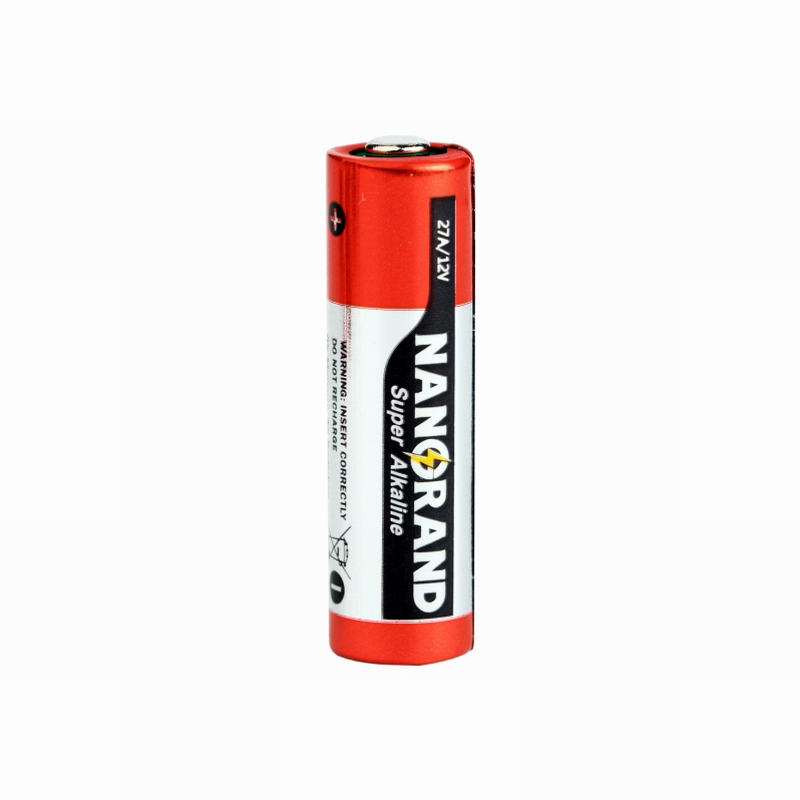
Hardware engineering directly influences how efficiently a device extracts energy from its power source. Implementing intelligent design strategies mitigates the natural limitations of primary cells.
Engineers utilize two primary methods to maximize extracted energy. These solutions involve manipulating the duty cycle and optimizing the voltage regulation architecture.
Intermittent Duty Cycles: Continuous high-current draw damages efficiency. It prevents the essential migration of active materials within the internal chemical structure. The cell starves itself locally around the electrodes. Designing firmware to utilize strict rest periods solves this problem. These calculated pauses allow the internal voltage to recover. The active materials migrate evenly. This intermittent approach significantly extends the total energy you can extract before device shutdown.
Voltage Regulation Architecture: The method you use to step down or manage voltage profoundly impacts overall runtime. We evaluate two common regulator types for commercial hardware.
| Regulator Type | Efficiency | Key Advantages | Primary Drawbacks |
|---|---|---|---|
| Low Dropout (LDO) | Low to Moderate | Cost-effective, low-noise output, minimal component footprint. | Highly inefficient for maximizing battery life. Wastes excess voltage as heat. |
| Switching (Buck/Boost) | High (Up to 96%) | Extracts energy even as cell voltage drops significantly below cutoff. | Requires complex electromagnetic interference (EMI) management. Higher cost. |
Hardware developers must weigh initial manufacturing expenses against long-term operational viability. Switching regulators definitely incur higher component costs. They also demand more complex circuit board layouts to handle EMI. However, you must balance this upfront investment against massive field savings. Efficient regulators extract energy far below normal operational thresholds. This drastically reduces manual replacement intervals for deployed commercial fleets. The long-term reliability heavily outweighs the initial circuit costs.
Theoretical engineering often clashes against implementation realities. Over 90% of commercial devices require multi-cell configurations to reach necessary operating voltages or runtimes. These combinations introduce critical failure points into your hardware ecosystem.
Connecting cells in series boosts the total voltage. However, this arrangement operates strictly on a "weakest link" principle. The total operational time is bottlenecked entirely by the single cell holding the highest internal resistance. As current flows through the series chain, the weakest unit experiences the most severe voltage drop.
Mixing different cell ages, brands, or manufacturing batches amplifies this risk. A degraded unit will drop below the safe voltage threshold instantly under load. It triggers a complete device shutdown. This occurs even if every other cell in the series chain retains maximum chemical capacity. Uniformity is mandatory for series stability.
Parallel connections attempt to boost total amp-hour capacity. Unfortunately, they introduce devastating physical risks. Discrepancies in individual cell capacity lead to highly uneven load distribution across the parallel circuit.
The stronger cell inevitably bears the brunt of the operational load. Worse, the stronger cell can force a deep, reverse discharge onto the weaker unit. This unnatural electrical stress breaks down internal chemical barriers. It drastically increases the risk of sudden chemical leakage. The highly corrosive potassium hydroxide electrolyte will escape the casing. It destroys expensive hardware contacts and ruins the entire device.
Engineering teams must adjust their fundamental design philosophies. Avoid incorporating parallel primary power configurations in hardware design wherever possible. If series connections remain necessary, specify strict batch-matching protocols. Procurement must ensure field technicians deploy uniform batches from identical manufacturing dates. Never mix fresh inventory alongside partially depleted units.
Environmental conditions dictate physical chemistry. We must acknowledge transparent assumptions and establish evidence-oriented limits for field deployments. Attempting to force primary power cells beyond their natural physical boundaries guarantees catastrophic failure.
Thermal stress acts as the primary catalyst for rapid cell death. Continuous operation or storage above 35°C accelerates the natural self-discharge rate exponentially. The internal chemical reaction generates excessive gas under high heat. This causes the potassium hydroxide electrolyte to expand aggressively. The pressure builds against the safety seal. Eventually, the seal ruptures entirely. This leads to complete power failure and immediate hardware corrosion.
Freezing environments present a completely different set of physical challenges. At 0°C and below, the mobility of internal ions decreases rapidly. The Equivalent Series Resistance (ESR) spikes in direct response. The cell might test as fully charged indoors. Yet, it fails immediately outdoors. At -30°C, the internal resistance becomes far too high. It simply cannot support sudden milliamp (mA) pulses required by wireless transmitters. The voltage crashes instantly under load.
You must acknowledge a harsh reality: optimizing an Alkaline Battery cannot overcome fundamental physics. Certain deployment scenarios require alternative frameworks. For extreme low-temperature IoT deployments, you must abandon standard chemistries entirely. Transition your hardware to solutions offering lower cold-weather ESR. Nickel-Cadmium (NiCd) or specialized Lithium formulations handle freezing pulses far more effectively. Pivoting to appropriate chemistries prevents massive field deployment failures.
Sustaining a massive commercial fleet requires meticulous inventory control. Proper lifecycle management ensures your replacement supplies perform reliably when finally deployed into the field.
Every primary cell degrades passively over time. They naturally lose roughly 2-3% of their total capacity per year at standard room temperature. You must establish strict self-discharge baselines for your stored inventory. Calculate this annual loss into your deployment estimates.
Storage compliance demands rigorous environmental monitoring. Maintain your ambient facility temperatures strictly between 10°C and 25°C. You must also monitor ambient moisture aggressively. Keep warehouse relative humidity strictly below 60%. High humidity rapidly accelerates terminal oxidation. Oxidized terminals ruin electrical conductivity before the unit even enters a device.
Warehouse managers often fall victim to outdated urban legends regarding power storage. You must explicitly prohibit the refrigeration or freezing of your commercial stock. Cold storage provides absolutely no measurable capacity benefit. Furthermore, taking cold units into a humid room creates immediate condensation. This moisture settles around the negative terminal. It severely compromises the safety seal integrity and accelerates fatal terminal corrosion.
Effective procurement requires disciplined supply chain execution. Enforce a strict First-In-First-Out (FIFO) inventory rotation policy across all warehouses. Older stock must rotate into active field use first. This simple policy prevents deploying severely degraded, multi-year-old cells into mission-critical hardware.
Finally, establish non-negotiable operational policies regarding device storage. Technicians must physically remove all power cells from any device entering long-term storage. Idle hardware sitting in warehouses for months will inevitably experience parasitic drain. Removing the cells completely eliminates expensive leakage liabilities and preserves the host hardware.
Optimizing operational performance requires looking closely beyond basic marketing capacity specs.
Hardware duty cycles and internal resistance directly dictate how much power you actually extract.
Multi-cell configurations demand strict uniformity; mismatched batches cause premature shutdown and leakage.
Extreme heat ruptures safety seals, while extreme cold spikes internal resistance beyond usable limits.
Strict environmental controls and FIFO inventory management guarantee reliable field deployments.
Engineering teams should immediately audit their device cutoff voltages. They must also evaluate their internal power regulator efficiency to maximize extracted energy. Meanwhile, procurement divisions should mandate standardized batch-matching protocols. Implement strict FIFO storage practices across all facilities. These combined efforts ensure maximum field reliability and eliminate unexpected hardware downtime.
A: No. Attempting to recharge or "jump-start" primary alkaline cells is an acute safety hazard that leads to hydrogen gas buildup, rupture, and leakage.
A: Extreme cold causes Equivalent Series Resistance (ESR) to spike. The battery retains chemical energy, but the internal resistance prevents it from delivering the required current pulse, causing the device voltage to crash under load.
A: No. Discrepancies in internal impedance and capacity create uneven power drains. In multi-cell devices, this causes the weakest cell to over-discharge, which is the primary cause of alkaline electrolyte leakage and device destruction.
A: A climate-controlled environment between 10°C and 25°C (50°F to 77°F) with relative humidity below 60%. Refrigeration provides no measurable benefit and introduces fatal condensation risks.


