- All
- Product Name
- Product Keyword
- Product Model
- Product Summary
- Product Description
- Multi Field Search


Views: 0 Author: Site Editor Publish Time: 2025-12-29 Origin: Site


A 9V battery is a compact power source used in many devices. From household items to specialized equipment, it provides reliable energy. Among the various 9V battery types, alkaline batteries stand out for their cost-effectiveness and consistent performance.
In this guide, we will explore the specifications of 9V alkaline batteries and their common uses. You’ll learn why these batteries remain a preferred choice for so many applications.
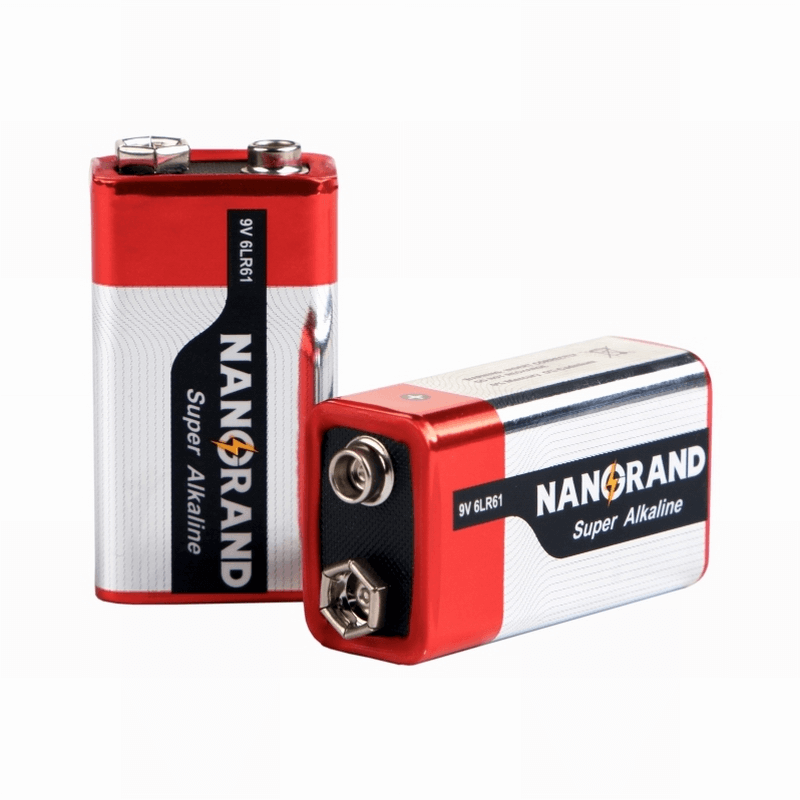
A 9V battery is distinctively rectangular and typically measures 48.5mm × 26.5mm × 17.5mm. The battery consists of six individual 1.5V cells connected in series, which together provide 9 volts of output power. This structure allows the 9V battery to deliver stable energy over an extended period, making it ideal for both low and medium drain devices.
Voltage and Capacity: A typical 9V alkaline battery provides 9 volts and has a capacity between 400mAh to 600mAh. This range ensures it can power devices like smoke detectors, remote controls, and certain audio equipment.
Shelf Life and Temperature Range: Alkaline 9V batteries have a shelf life of up to 7 years when stored properly, making them an excellent option for backup devices. Their temperature tolerance is typically between -40°C and 60°C, allowing them to perform reliably in a variety of environments.
Energy Density and Reliability: Alkaline batteries provide a good balance between energy density and reliability, making them a dependable power source for both high-drain and low-drain devices.
Feature | Specification |
Voltage | 9V |
Capacity | 400mAh - 600mAh |
Shelf Life | Up to 7 years |
Temperature Range | -40°C to 60°C |
Energy Density | Good balance |
● Alkaline: The most common and widely used 9V battery type. Known for its cost-effectiveness, long shelf life, and reliable performance in normal temperature conditions.
● Lithium: Offering a higher capacity (600mAh to 1200mAh) and superior performance in extreme temperatures, lithium 9V batteries are ideal for high-drain applications like medical devices.
● Zinc-Carbon: These are budget-friendly, with a lower capacity (200mAh to 400mAh) and a shorter shelf life, best suited for low-drain applications.
● NiMH and Lithium-ion Rechargeable: Rechargeable batteries with lower initial voltage but a higher number of charge cycles, making them cost-effective for frequent use in devices like wireless microphones and test equipment.
Type | Capacity | Best For |
Alkaline | 400mAh - 600mAh | Cost-effective, everyday use |
Lithium | 600mAh - 1200mAh | High-drain applications |
Zinc-Carbon | 200mAh - 400mAh | Budget-friendly, low-drain use |
NiMH & Lithium-ion | Varies | Rechargeable, frequent use |
One of the main reasons to choose 9V alkaline batteries is their affordability and widespread availability. Compared to other types of 9V batteries, alkaline batteries are more cost-effective, making them ideal for both everyday consumers and businesses looking for reliable power sources without breaking the budget.
Alkaline batteries offer a consistent voltage output over time, which is crucial for devices requiring steady power, such as smoke detectors, radios, and audio equipment. This stable voltage helps ensure that these devices function properly when needed most.
Unlike many other battery chemistries, alkaline 9V batteries are mercury-free, making them a safer and more environmentally friendly option. Their low environmental impact makes them an appealing choice for consumers and businesses aiming to reduce their ecological footprint.
Reason | Benefit |
Cost-Effectiveness | Affordable, widely available, budget-friendly |
Reliability | Consistent voltage for stable performance |
Eco-Friendliness | Mercury-free, safer and environmentally friendly |
One of the most critical applications of 9V alkaline batteries is in safety and security devices like smoke detectors and carbon monoxide alarms. These devices rely on the long shelf life and reliable performance of alkaline batteries to ensure that they remain functional, providing essential protection in the event of an emergency.
9V alkaline batteries are frequently used in professional testing and measurement equipment, such as multimeters, sound meters, and electrical testers. These devices require stable voltage and compact power sources to function accurately, making alkaline 9V batteries the preferred choice for professionals in fields ranging from engineering to construction.
9V alkaline batteries are widely used in audio devices like guitar pedals, wireless microphones, and small preamps. Musicians and audio professionals often rely on the long-lasting power of alkaline 9V batteries during live performances or in studio settings. In addition, rechargeable options like NiMH and Li-ion batteries are becoming increasingly popular for regular use in musical equipment due to their cost-effectiveness over time.
In industrial applications, 9V batteries are used in equipment such as sensors, portable testing tools, and emergency lighting systems. These applications require batteries that are both reliable and long-lasting, making lithium 9V batteries a common choice due to their superior performance in extreme temperatures.
Application | Devices/Uses | Key Benefit |
Safety and Security | Smoke detectors, carbon monoxide alarms | Long shelf life, reliability |
Professional Equipment | Multimeters, sound meters, electrical testers | Stable voltage, compact power |
Audio and Musical | Guitar pedals, wireless microphones, preamps | Long-lasting power, rechargeable options |
Industrial & Emergency | Sensors, portable tools, emergency lighting | Reliability, performance in extreme temperatures |
Lithium 9V batteries offer superior capacity (600mAh to 1200mAh) and a much longer shelf life (10+ years), making them ideal for high-drain devices and critical applications like medical equipment. They also perform well in extreme temperatures, from -40°C to 60°C. However, they come at a higher cost. In comparison, alkaline 9V batteries, with their moderate capacity and cost, are more suitable for everyday, low to medium-drain devices.
Zinc-Carbon 9V batteries are the most economical choice, but they have a lower capacity (200mAh to 400mAh) and a shorter shelf life, typically up to 2-3 years. They are ideal for basic electronic devices that do not require continuous or high-power output. On the other hand, alkaline batteries offer a better balance of cost, capacity (400mAh to 600mAh), and shelf life, making them suitable for more demanding applications.
Rechargeable NiMH and Lithium-ion 9V batteries are ideal for users who need to replace batteries frequently. They offer lower long-term costs due to their multiple charging cycles (up to 500 for NiMH and over 1000 for Li-ion). However, they come with the downside of requiring specialized chargers and having lower initial voltage (8.75V for NiMH). Alkaline batteries, with their reliable initial voltage and moderate cost, remain the preferred option for many casual and emergency-use applications.
For optimal performance, always ensure that the battery is installed correctly by aligning the positive and negative terminals with the device’s contact points. Avoid forcing a battery into position and replace all batteries in a device at the same time to ensure balanced power delivery.
To extend the life of your 9V alkaline batteries, store them in a cool, dry place, away from direct sunlight and extreme temperatures. Keeping them in their original packaging or using terminal covers can help prevent accidental short circuits.
Regularly check your devices for signs of battery corrosion or leakage. If your device has not been in use for a long period, it’s wise to remove the batteries to prevent damage. For devices that rely on 9V batteries, ensure that replacements are made as needed to maintain their performance and safety.
Tip | Best Practice |
Installation | Align terminals correctly, avoid forcing battery |
Storage | Store in cool, dry place, away from sunlight |
Battery Replacement | Check for corrosion, remove batteries if unused for long periods |
Safety | Replace batteries as needed for optimal performance |
9V alkaline batteries are a reliable and cost-effective power source for numerous applications. Whether for household safety devices or professional equipment, they are crucial in daily life. Understanding their specifications and maintenance ensures optimal performance. Suzhou Nanguang Battery Co., Ltd. provides high-quality 9V batteries, offering dependable energy solutions that meet diverse needs, ensuring value for both short-term and long-term use.
A: A 9V battery is commonly used in devices like smoke detectors, radios, and testing equipment due to its reliable power output.
A: A typical 9V alkaline battery has a capacity of 400-600mAh and a shelf life of up to 7 years, operating within temperatures from -40°C to 60°C.
A: 9V alkaline batteries are cost-effective, reliable, and environmentally friendly, making them ideal for everyday devices and safety equipment.
A: A 9V alkaline battery typically lasts up to 7 years when stored properly, depending on usage and environmental conditions.
A: For high-drain devices, lithium 9V batteries are recommended, as they offer longer-lasting power compared to alkaline batteries.
A: Store 9V batteries in a cool, dry place, away from extreme temperatures, to maximize their shelf life and performance.


