- All
- Product Name
- Product Keyword
- Product Model
- Product Summary
- Product Description
- Multi Field Search


Views: 0 Author: Site Editor Publish Time: 2026-09-15 Origin: Site


You likely pause when seeing the high checkout price of rechargeable power setups. A four-pack of disposable alkalines looks incredibly cheap by comparison. This psychological barrier keeps many people buying disposables over and over. However, you should view the transition to Rechargeable Batteries differently. This is not merely a green initiative for the eco-conscious. It is a calculated operational investment. You must evaluate this choice through a rigorous long-term financial lens rather than shelf price. In this article, we provide an evidence-backed framework to guide your power strategy. You will learn how to calculate exact break-even points for your devices. We will help you identify which electronics yield the highest return on investment. Finally, you will discover how to build a risk-managed power strategy. This approach guarantees you protect your most valuable hardware from chemical damage while slashing household expenses.
Rapid Break-Even: Financial parity with disposables is typically reached within 7 to 17 recharge cycles, after which electricity costs are mathematically negligible (often under $0.25/year).
Asset Protection: Transitioning away from alkaline batteries eliminates the costly risk of acid leakage ruining expensive electronics.
The "30-60 Day" Deployment Rule: Rechargeables yield maximum ROI in high-drain devices requiring replacements every 1-2 months; using them in ultra-low-drain devices (like smoke alarms) is a misallocation of capital.
Consistent Output: Unlike alkalines that experience voltage sag as they deplete, modern rechargeable chemistries maintain stable power output until fully discharged.
To understand the true cost of power, we must deconstruct battery expenditure. We divide this into two distinct categories. First, you face "Startup Capital." This includes your premium cells and a high-quality smart charger. Second, you incur "Maintenance Cost." This represents the minute amount of electricity drawn during each charging cycle.
Let us calculate the exact break-even point. Consider a standard financial return model for a heavily used device like a professional camera flash or a gaming console. You might invest $148 upfront for a high-end smart charger and 36 premium cells. Contrast this against the perpetual, never-ending replacement costs of alkaline equivalents. The math reveals a rapid return. Individual cells generally hit their financial break-even point in under 20 cycles. Once you charge a cell 20 times, it has effectively paid for itself. After that, the electricity costs practically nothing. Recharging 120 times over a year consumes barely 2.4 kilowatt-hours. This costs under 25 cents annually.
Furthermore, disposable batteries hide a massive "Iceberg" of unrecorded expenses. You rarely track these hidden costs, yet they drain your resources constantly. They include the constant procurement time spent driving to the store or reordering supplies online. You also face severe device downtime when power fails during critical moments. Finally, managing a rotating inventory of single-use batteries creates unnecessary mental friction. Switching to a renewable setup eliminates this friction entirely. You transform an ongoing monthly liability into a fixed, manageable asset.
Alkaline batteries carry a hidden, destructive flaw. This risk stems from their fundamental chemical reality. As primary alkaline cells discharge over time, their internal chemistry generates hydrogen gas inside the sealed steel canisters. This internal pressure slowly builds up. Eventually, it leads to mechanical seal failure at the negative terminal. When the seal breaks, highly corrosive potassium hydroxide leaks out. This caustic substance crawls along battery contacts and destroys delicate circuit boards instantly.
We must shift the cost-saving argument entirely. You should stop comparing battery-to-battery prices. Instead, focus entirely on hardware protection. A leaked $0.50 alkaline battery can completely destroy a $150 professional flashlight. It can ruin an expensive, irreplaceable vintage gaming controller overnight. The true cost of a ruined device dwarfs any perceived savings at the checkout counter.
Fortunately, Rechargeable Batteries offer inherent stability. Nickel-Metal Hydride (NiMH) and Lithium-Ion (Li-ion) architectures bypass this alkaline leakage mechanism completely. Their internal chemistry does not produce the same corrosive gas buildup under normal, daily use. Therefore, deploying these cells acts as a powerful insurance policy. You protect your high-value electronics from sudden death while simultaneously lowering your operational costs. Many professionals refuse to put alkaline cells in their expensive gear for this exact reason.
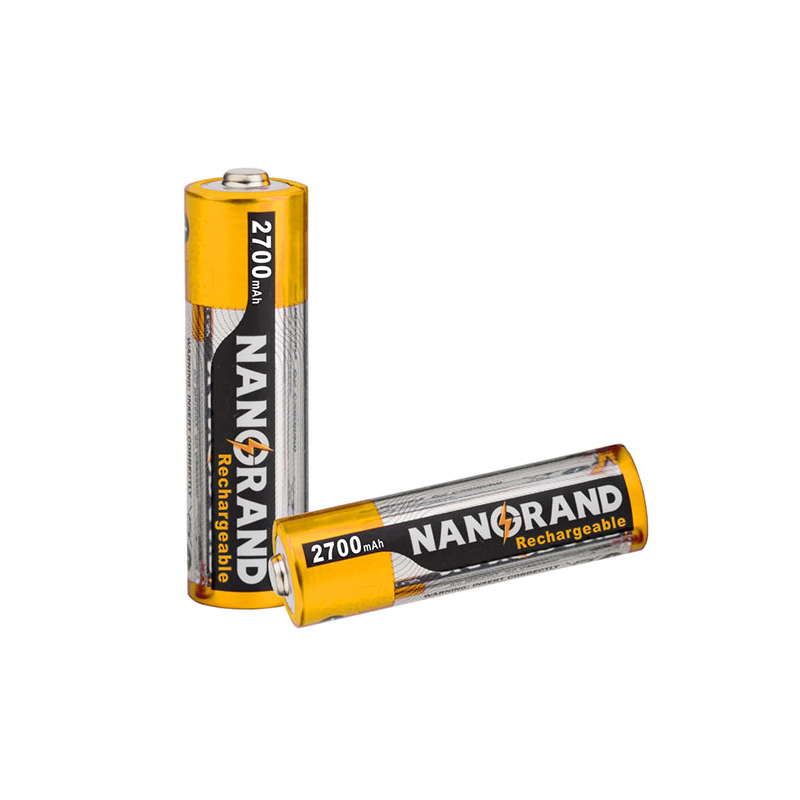
You should avoid the common "all-or-nothing" trap. Upgrading every single device in your home or office is actually a mathematical mistake. We build trustworthiness by explicitly identifying where these setups fail. In certain specific scenarios, rechargeable setups result in a negative financial return.
Consider the low-drain misallocation problem. Ultra-low-current devices like wall clocks, television remotes, and smoke alarms draw almost microscopic amounts of power. If you put premium rechargeable cells in a wall clock, they take over a decade to reach a break-even point. Often, the cell will outlast its physical degradation cycle before you ever need to recharge it. This ties up your capital needlessly and provides zero financial benefit.
We recommend using the highly actionable "30-60 Day Evaluation Matrix." You can apply this diagnostic rule today:
Does the device burn through its power supply in under 60 days?
Does it require frequent, heavy usage?
Is it a motor-driven, heating, or high-lumen gadget?
If you answer yes to any of these questions, the device becomes a priority candidate for immediate migration.
To maximize efficiency, build a hybrid power strategy. Wholesale purchasing of primary lithium or long-life alkalines makes perfect sense strictly for low-drain, mission-critical safety devices. Save your advanced rechargeable cells exclusively for high-drain hardware like wireless microphones, portable radios, and heavy-duty toys. This targeted approach guarantees the highest possible return on your investment.
Not all cells deliver the same results. You must understand the specific capabilities of different chemistries to match them correctly to your hardware.
We primarily choose between two advanced platforms:
NiMH (1.2V): You should focus heavily on Low Self-Discharge (LSD) technology. LSD models excel at household standardization. They retain their charge beautifully over many months of inactivity. This makes them perfect for game controllers and computer mice.
Li-ion (3.7V or 1.5V regulated): These offer incredibly high energy density. Advanced models now include tiny internal buck converters. These converters provide strict, constant 1.5V output. You will find them best for professional, high-draw applications needing sustained peak power.
One massive advantage involves voltage consistency. Disposables suffer from severe performance drop-off. As an alkaline depletes, its voltage sags dramatically. Your flashlight dims noticeably. Your motorized toys slow down. Conversely, modern chemistries deliver a remarkably flat discharge curve. They give you three to four times the operational consistency in peak-demand scenarios. Your device performs at maximum power until the cell is fully discharged, then cuts off cleanly.
Always perform compatibility checks before bulk ordering. A small percentage of legacy electronics require higher initial voltage thresholds. Alkalines start at 1.5 Volts, while standard NiMH starts at 1.2 Volts. Most modern circuits accept 1.2 Volts perfectly. However, test a few cells in your specific hardware first to evaluate compatibility prior to mass purchasing.
| Chemistry Type | Nominal Voltage | Best Practical Use Case | Discharge Profile Characteristics |
|---|---|---|---|
| Alkaline (Primary) | 1.5V | Ultra-low drain (clocks, basic remotes) | Sloping drop-off; voltage sags continuously |
| NiMH (LSD) | 1.2V | Standard household electronics, gaming | Flat and consistent until empty |
| Lithium-Ion (Regulated) | 1.5V (Buck converted) | Professional gear, high-lumen flashlights | Highly constant output; immediate shutoff |
Your overall power strategy relies heavily on the quality of your charging infrastructure. We must warn you against the severe "dumb charger" hazard. Never pair premium cells with bottom-tier, timer-based chargers. These cheap units blindly pump current into the cells based on a fixed clock. They overcook your batteries, degrade internal chemistry, and slash physical lifespan significantly.
Instead, you must specify smart chargers for your setup. Look for the following minimum technical requirements:
Independent channel monitoring: Each slot charges individually based on the specific needs of the inserted cell.
Delta-V termination: A precise auto-shutoff mechanism detects a slight voltage drop, signaling the cell is perfectly full.
Thermal protection: Built-in temperature sensors prevent dangerous overheating during rapid charge cycles.
You also need realistic lifespan expectations. A manufacturer might rate a cell for 1,000 or more cycles on the packaging. However, real-world factors dictate the true operational lifespan. Storage temperature and depth-of-discharge play massive roles in longevity. Typically, you can expect 5 to 10 years of robust, daily use if you treat them properly.
Finally, strictly observe basic safety protocols. High-density Li-ion cells require active thermal runaway management. Always emphasize the absolute necessity of using matched, brand-compliant charging hardware. Do not mix chemistries in the same charger unless it specifically supports multi-chemistry scanning. A quality charger guarantees safety, maximizes longevity, and ensures your financial investment pays off safely over the next decade.
We have seen how standard batteries drain your wallet over time. They transition from an ongoing expense to a cost-saving asset the exact moment you deploy them correctly. Matching the right chemistry with your device drain rates guarantees a rapid break-even. You eliminate the threat of acid leaks and secure consistent, reliable power.
We recommend a simple 30-day phased rollout to get started. First, audit the top three highest-draining devices in your home or business. Next, acquire a highly rated smart charger and a dozen premium cells. Finally, track the immediate reduction in your disposable consumption. You will see financial benefits within the first two months.
A: Yes. You amortize the charger cost over the 5-10 year lifespan of the batteries. A $30 smart charger pays for itself quickly when you stop buying $15 disposable packs every month. The long-term savings completely eclipse the initial hardware investment.
A: Older chemistries suffered from high self-discharge rates. They lost power rapidly even when unused. Modern Low Self-Discharge (LSD) technology solves this. Quality LSD NiMH cells retain up to 70% of their charge after ten years in storage.
A: Almost always. An alkaline battery drops from 1.5V to 1.2V very quickly under load. NiMH maintains a steady 1.2V until it is nearly empty. Because modern circuits accommodate this voltage drop naturally, NiMH performs identically or better in most devices.
A: Set realistic expectations based on usage. Quality cells typically endure 500 to 1,500 full charge cycles. Depending on the specific chemistry and your smart charger's quality, they easily provide 5 to 10 years of reliable service before requiring replacement.


