- All
- Product Name
- Product Keyword
- Product Model
- Product Summary
- Product Description
- Multi Field Search


Views: 0 Author: Site Editor Publish Time: 2026-09-29 Origin: Site


Despite the rapid rise of rechargeable lithium-ion technology, everyday consumer and commercial devices still rely heavily on the traditional Alkaline Battery. You find them powering everything from basic office remotes to critical smart home sensors. However, flashy marketing claims heavily obscure actual battery life and performance capabilities. Buyers frequently overpay for heavily branded premium variants. They also mistakenly place these standard cells into high-drain devices where they will inevitably underperform and fail prematurely.
This comprehensive guide provides an evidence-based, data-driven framework for consumers and businesses alike. You will learn how to accurately evaluate, size, and purchase the right battery for your specific needs. We will help you cut through the marketing fluff, decode technical labels, and understand the core physics behind battery discharge. By the end, you will make smarter, safer, and more effective procurement decisions.
Capacity is Load-Dependent: An alkaline battery's stated capacity (mAh) drastically shrinks under high-current loads; they are optimal for low-drain devices (remotes, clocks) but fail rapidly in high-drain electronics (cameras, high-lumen flashlights).
Beware the Multimeter Myth: Testing an alkaline battery without a load will often show 1.5V even if it is depleted. True evaluation requires load condition testing tracking the voltage drop curve.
Understand IEC Labeling: Knowing international standard codes (e.g., LR6 for AA) ensures precise compatibility and prevents purchasing non-alkaline (zinc-carbon) equivalents by mistake.
Premium Isn't Always Better: Lab tests frequently show negligible performance differences between standard alkaline batteries and heavily marked-up "Pro" or "Max" variants.
You must understand internal chemistry to evaluate true performance. Zinc powder acts as the internal anode. Manganese dioxide functions as the cathode. Potassium hydroxide serves as the conducting electrolyte. Unlike primary lithium cells, an Alkaline Battery does not deliver a flat, steady voltage. It experiences a continuous, sloping voltage decline as it discharges.
This sloping curve explains high-load voltage sag. A standard cell might hold a theoretical capacity of 2500 mAh. However, this high capacity only applies under very gentle current loads. If a modern device draws loads exceeding 1A to 2A, internal resistance spikes immediately. The cell voltage drops below the device's operating threshold extremely fast. This physical limitation explains a common daily frustration. A standard cell might power a basic wall clock for over a year. Yet, the exact same cell will crash in thirty minutes inside a high-powered digital camera.
Many consumers also fall for the open-circuit testing flaw. People often use a standard multimeter to test battery health. They touch the probes to the terminals and see a 1.5V reading. They incorrectly assume the cell remains perfectly healthy. We must debunk this common practice. An exhausted cell can easily show 1.5V under zero load. The voltage will immediately collapse the moment you insert it into a demanding device. Credible quality assurance requires rigorous load condition testing. Professional laboratories draw a consistent 600mA load from the cell. They then measure the exact time required to reach a strict 0.94V cutoff point.
Consumers typically rely on colloquial names like AA or AAA. Technical buyers must look deeper and understand international standard codes. The International Electrotechnical Commission (IEC) standardizes these battery labels globally. Knowing these codes ensures precise device compatibility. It also prevents critical purchasing mistakes.
| Consumer Name | IEC Standard Code | Approximate Dimensions |
|---|---|---|
| AA | LR6 | 50.5 x 14.5 mm |
| AAA | LR03 | 44.5 x 10.5 mm |
| C | LR14 | 50.0 x 26.2 mm |
| D | LR20 | 61.5 x 34.2 mm |
| 9V | 6LR61 | 48.5 x 26.5 x 17.5 mm |
You must also identify and avoid fake alkalines. Discount stores often sell extremely cheap "Heavy Duty" batteries. The branding sounds impressive and industrial. In reality, these manufacturers use severely outdated Zinc-Carbon chemistry. These cheap variants typically offer only one-third to one-seventh the overall capacity of a genuine alkaline cell. The "LR" prefix serves as your mandatory indicator of true alkaline chemistry. The letter "L" specifically designates alkaline. If you only see an "R" on the label (like R6 instead of LR6), you are buying a weak zinc-carbon equivalent.
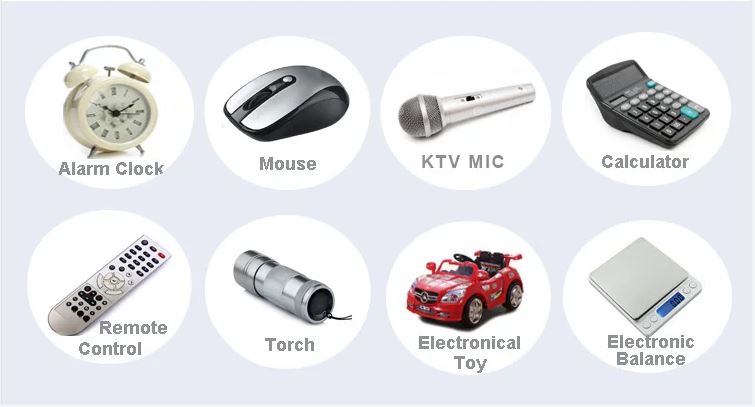
Every battery chemistry features an ideal operational window. You must match the specific battery type to your device's exact power draw. Applying the wrong chemistry leads to extreme frustration and wasted money.
First, consider the low-drain sweet spot. Alkaline cells completely dominate this specific deployment environment. They excel in devices requiring micro-amps or intermittent low-milliamp draws. Ideal deployments include your television remotes, basic smoke detectors, smart home sensors, and wall clocks. In these simple devices, the battery discharges slowly over many months or years. The gradual voltage decline does not disrupt the device's basic functions.
Conversely, you must recognize the high-drain cliff. High-lumen tactical flashlights demand massive, instantaneous current. Motorized toys and rapid camera flashes also require aggressive power delivery. In these demanding scenarios, alkaline chemistry fails immediately. The voltage collapses rapidly under the sudden, heavy load. You leave behind a massive portion of the battery's theoretical capacity untouched. For high-drain electronics, you must mandate NiMH (Nickel-Metal Hydride) rechargeables. You can also use Primary Lithium (LiFeS2) options to prevent rapid voltage collapse.
Temperature resilience also defines operational boundaries. Environmental temperature drastically impacts internal chemical reactions. You must understand how cold weather affects your portable power sources.
| Temperature Environment | Approximate Capacity Retained | Performance Status |
|---|---|---|
| Room Temp (20°C / 68°F) | 100% | Optimal performance baseline |
| Freezing (0°C / 32°F) | ~50% | Severe voltage sag under load |
| Extreme Cold (-18°C / 0°F) | 0% - 10% | Virtually unusable |
Alkaline battery capacity drops by roughly 50% at freezing temperatures (0°C). The cell becomes virtually unusable at -18°C. The internal electrolyte cannot facilitate necessary chemical reactions effectively in severe cold. Primary lithium remains your only viable choice for extreme cold environments.
Consumers constantly face a wall of aggressively marketed battery tiers. Brands use flashy terms like "Pro," "Ultra," or "Max" to justify steep retail markups. You should approach these aggressive claims with extreme caution.
Industry laboratory testing frequently shatters the "Pro" branding illusion. These independent tests often show negligible longevity gains between standard commercial tiers and heavily marked-up premium variants. Sometimes, premium versions actually deliver worse performance under certain specific loads. The core underlying chemistry remains largely unchanged across these different product lines. You frequently pay for premium packaging and marketing campaigns rather than measurable power increases. Laboratory realities show you should prioritize trusted standard variants directly from reputable manufacturers.
Instead of chasing premium labels, evaluate true shelf life value. Modern cells offer a remarkable five-to-10-year reliable shelf life. We frame this long shelf life as a vital emergency preparedness asset. Manufacturers seal these cells tightly to prevent internal degradation during long storage periods. If you store them correctly, they easily retain up to 90% of their original capacity after a full decade. This extended shelf life provides excellent backup power for emergency radios, medical devices, and basic flashlights.
You must actively manage physical deployment risks to protect your expensive devices. Improper usage frequently destroys electronic contacts and circuit boards.
Understanding the basic mechanics of battery leaks helps prevent equipment damage. All batteries naturally vent trace amounts of gas as they discharge. Sometimes, excess internal pressure ruptures the protective rubber seal. This mechanical failure releases potassium hydroxide. This highly corrosive alkaline fluid rapidly degrades electrical contacts. Leaks specifically occur when users mix batteries improperly. You should never mix old cells with brand-new ones. You must never mix Brand A with Brand B in the same device. Leaving depleted cells inside dormant devices for months also virtually guarantees dangerous leakage.
You must also monitor series versus parallel vulnerabilities. Many devices use multi-cell series setups to achieve higher voltages. The weakest individual cell in a series configuration faces extreme physical stress. Stronger surrounding cells can actually push the depleted cell into a state of "reverse polarity." This abnormal state accelerates the internal chemical breakdown and drastically increases leakage risk.
Following strict storage best practices prevents premature failures:
Maintain Climate Control: Store all units in cool, completely dry environments.
Avoid Refrigeration: Never refrigerate your batteries. Condensation causes extreme terminal corrosion.
Isolate Terminals: Always isolate loose cells from coins, keys, or metal objects to prevent accidental short circuits.
Keep Original Packaging: Retain the original blister pack to organize cells and maintain physical separation.
Finally, we must address modern Environmental Impact (ESG) considerations. Modern corporate sustainability standards require careful auditing of all consumable goods. We can confirm current generation products are entirely mercury-free. This shift represents a massive environmental improvement over toxic older technologies. However, you must acknowledge their higher CO2 equivalent footprint compared to rechargeable alternatives. Because you dispose of them frequently, they generate higher lifetime carbon emissions. You should always utilize local electronic recycling programs to properly mitigate this environmental impact.
Procurement decisions require clear, objective guidelines. You should buy your batteries in bulk for widespread, low-drain office or household deployment. Bulk purchasing ensures you have reliable power ready for remotes and sensors. Always check the packaging and prioritize exceptionally fresh manufacturing dates. Reputable commercial brands consistently offer far better reliability than highly marketed premium consumer lines.
Evaluate your electronic ecosystem carefully before installation. Keep standard alkaline cells designated for your low-drain, intermittent usage devices. However, you must recommend transitioning mission-critical applications to more robust chemistries. High-drain devices, motorized tools, and extreme-temperature applications strictly require NiMH or Primary Lithium alternatives. Following this strategic matching process will ultimately protect your valuable devices and optimize your overall power reliability.
A: No, attempting to charge primary alkaline cells risks rupture and severe chemical leakage. The internal chemistry is strictly designed for single-use discharge. Only specific "rechargeable alkaline" or NiMH batteries should ever be connected to a charging device.
A: Neutralize the alkaline potassium hydroxide with a mild acid. You can use white vinegar or lemon juice applied carefully with a cotton swab. Scrub the corroded electrical contacts gently, wipe the area clean, and then dry the compartment completely before inserting new cells.
A: High-drain devices cause severe voltage sag in alkaline chemistry. The internal resistance spikes under heavy current demand. This sudden voltage drop falls below the camera's operating threshold, leaving much of the battery's theoretical capacity completely inaccessible.
A: No, condensation causes severe corrosion on the metal terminals. Room temperature in a dry, climate-controlled environment is optimal for maintaining the 10-year shelf life. Refrigeration provides zero measurable longevity benefits for modern alkaline chemistry.


