- All
- Product Name
- Product Keyword
- Product Model
- Product Summary
- Product Description
- Multi Field Search


Views: 0 Author: Site Editor Publish Time: 2026-08-03 Origin: Site


Fragmented naming conventions create severe procurement bottlenecks for electronics manufacturers and retail distributors alike. Navigating through IEC, ANSI, and proprietary brand codes often leads to unnecessary confusion on the assembly line. Improper battery substitution risks device malfunction, customer dissatisfaction, and costly warranty returns. Reliable sourcing decisions must rely on exact physical dimensions, chemical composition, and precise discharge profiles. You cannot judge button cells by generic visual similarity alone.
When buyers accidentally select the wrong chemistry or tolerate poor dimensional tolerances, sensitive electronics often fail prematurely. We provide a definitive, data-backed cross-reference framework below. It translates obscure AG designations into globally recognized standard equivalents. In this guide, you will learn how to match physical sizes accurately and compare performance metrics. We also show you how to avoid common compliance pitfalls and leakage liabilities during bulk procurement.
The "AG" prefix indicates an Alkaline chemistry, operating at a nominal 1.5V, suitable for low-drain devices.
Direct equivalents exist across top-tier manufacturers (e.g., LR44, 384, 392), but exact dimensional tolerances dictate operational viability.
Substituting Alkaline (AG) for Silver Oxide (SR) equivalents lowers procurement costs but may compromise longevity and voltage stability in precision electronics.
Evaluating shelf-life, leakage guarantees, and safety compliance (like child-resistant packaging) is critical for bulk procurement and retail distribution.
Electronics engineers and procurement managers face a constant challenge during hardware development. Multiple manufacturers use different labels for the exact same physical cell. The International Electrotechnical Commission (IEC) developed a standard naming system to resolve this. In the IEC framework, "L" stands for alkaline chemistry, while "R" stands for a round shape. The trailing numbers denote the specific physical dimensions. Unfortunately, many generic overseas manufacturers still rely on the older "AG" prefix system. This master data table clarifies the confusion immediately.
We designed this AG Button Cell Battery Cross Reference Chart to streamline your sourcing process. It maps the entire AG series directly to standardized IEC nomenclature. You can confidently compare these generic designations against major brand equivalents from Duracell, Maxell, Energizer, and Rayovac. It allows buyers to cross-reference their required proprietary SKU against open-market alkaline alternatives rapidly.
You must match the exact dimensions listed below to guarantee proper fitment in your target devices. Even a fraction of a millimeter matters in tight battery compartments. The chart details diameter first, followed by height. Review these dimensions alongside the corresponding silver oxide options before making a final purchasing decision.
| AG Designation | IEC Standard | Physical Dimensions (Dia x H in mm) | Nominal Voltage | Silver Oxide Equivalent (SR / 300-series) |
|---|---|---|---|---|
| AG1 | LR621 | 6.8 x 2.1 | 1.5V | SR621 / 364 |
| AG2 | LR726 | 7.9 x 2.6 | 1.5V | SR726 / 396 |
| AG3 | LR41 | 7.9 x 3.6 | 1.5V | SR41 / 392 |
| AG4 | LR626 | 6.8 x 2.6 | 1.5V | SR626 / 377 |
| AG5 | LR754 | 7.9 x 5.4 | 1.5V | SR754 / 393 |
| AG6 | LR920 | 9.5 x 2.0 | 1.5V | SR920 / 371 |
| AG7 | LR927 | 9.5 x 2.7 | 1.5V | SR927 / 399 |
| AG8 | LR1120 | 11.6 x 2.1 | 1.5V | SR1120 / 391 |
| AG9 | LR936 | 9.5 x 3.6 | 1.5V | SR936 / 394 |
| AG10 | LR1130 | 11.6 x 3.1 | 1.5V | SR1130 / 389 |
| AG11 | LR721 | 7.9 x 2.1 | 1.5V | SR721 / 362 |
| AG12 | LR43 | 11.6 x 4.2 | 1.5V | SR43 / 386 |
| AG13 | LR44 | 11.6 x 5.4 | 1.5V | SR44 / 357 |
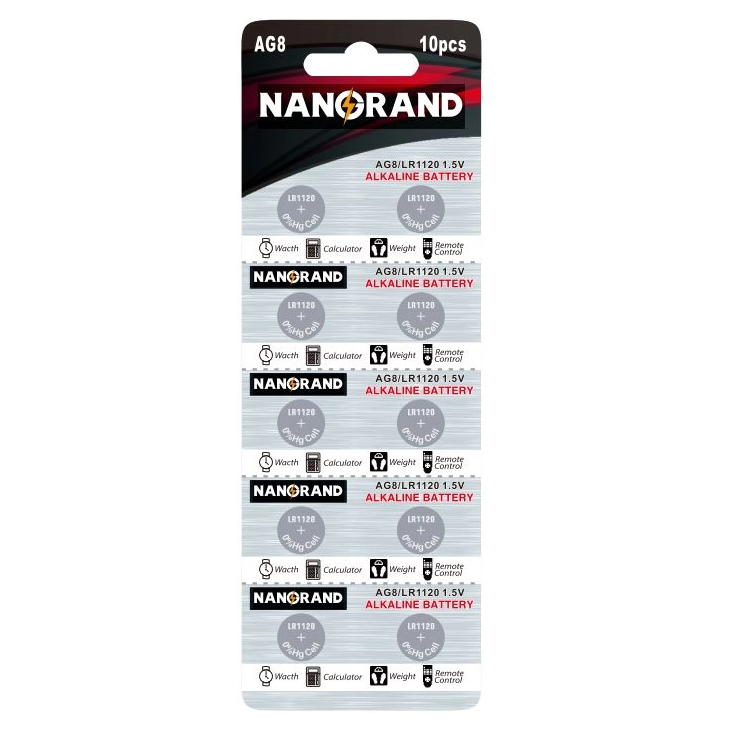
While the complete AG1 to AG13 Alkaline Button Cell Battery lineup covers hundreds of micro-electronics, market demand concentrates heavily on three specific models. These three sizes dominate replacement volume globally. Product designers specify these sizes repeatedly due to their optimal balance of capacity and physical footprint. Understanding their specific tolerances helps you avoid production delays and functionality issues.
The AG3 LR41 Battery features highly specific dimensions of 7.9mm in diameter and 3.6mm in height. These compact cells primarily power small, low-drain consumer goods. Common use cases include presentation laser pointers, digital oral thermometers, and promotional micro-LED flashlights. They provide reliable, cost-effective energy for intermittent operations.
You must exercise careful replacement logic here. Always confirm your device's drain threshold before swapping an SR41 silver oxide cell for an AG3 alkaline cell. High-drain thermometers might experience voltage drops prematurely if you use an alkaline replacement. When a thermometer voltage drops too quickly, the temperature calibration fails. We recommend testing a small batch of devices in a controlled environment before authorizing a bulk chemistry swap across your entire production line.
Next is the AG10 LR1130 Battery, measuring 11.6mm by 3.1mm. It possesses a notably wide, flat profile. Manufacturers commonly install them in basic desk calculators, small digital clocks, and novelty electronics. They deliver excellent financial value for low-cost electronic toys shipped in high volumes.
Consumers and buyers often misidentify this size during replacement. People confuse it for similar wider models due to its flattened shape. You must cross-verify the 389 or 390 silver oxide equivalent for continuous-drain applications. If your product requires steady voltage over months on a retail shelf, an alkaline AG10 might not meet the lifecycle requirements. Novelty electronics often sit in warehouses for extended periods. The battery must retain power during transit and storage to prevent dead-on-arrival complaints.
The AG13 LR44 Battery remains the most ubiquitous button cell worldwide. It measures 11.6mm across and 5.4mm high. You will find these powering home medical devices, heavy-duty electronic toys, and precise digital calipers. Their larger internal capacity handles moderately demanding electronics exceptionally well.
Because of its immense popularity, this specific model carries a high risk of counterfeit sourcing. Unverified generic suppliers sometimes relabel inferior cells as premium LR44s. Buyers must verify manufacturer leakage certifications directly from independent testing labs. Counterfeit batteries often leak caustic electrolytes, destroying expensive digital calipers or critical medical tools permanently. Always demand genuine technical spec sheets from your supply chain partners to guarantee product safety.
You must differentiate between the two primary button cell chemistries during product design. This outcome-focused comparison helps you optimize performance-to-cost ratios efficiently. Alkaline and silver oxide cells might share identical physical dimensions, but their internal chemical reactions differ significantly. Knowing when to deploy each chemistry saves you money and prevents catastrophic device failures.
Let us examine the specific voltage curves. An AG (Alkaline) cell starts at a nominal 1.5V. It experiences a gradual, sloping voltage drop as it discharges energy. Internal resistance increases as the alkaline battery depletes. This causes noticeable voltage sag under heavy loads. Conversely, an SR (Silver Oxide) cell starts slightly higher at 1.55V. It maintains a flat, highly stable discharge curve until almost complete depletion. This technical distinction dictates exactly where you can deploy each type safely.
Consider the cost versus application viability before procurement:
Alkaline (AG): These offer highly cost-effective energy for electronic toys and simple gadgets. They suit intermittent-use items perfectly. Choose these when your device tolerates gradual voltage declines without losing core functionality.
Silver Oxide (SR): These remain absolutely mandatory for precision instruments. Luxury watches, continuous blood glucose monitors, and sensitive sensors require completely stable voltage. Use these when sudden voltage drops cause calculation errors or time-keeping inaccuracies.
We must prioritize assumption transparency. Assuming an AG battery will perform identically to its SR equivalent causes major integration issues. Using a cheaper alkaline cell in a continuous, high-drain medical device will result in premature failure. This operational downtime damages brand reputation quickly and increases support tickets. Always align the chemistry explicitly to your product's specific power consumption profile.
Procurement teams face several hidden physical risks when importing button cells. Overlooking strict compliance standards leads to costly product recalls and severe device malfunctions. We advise addressing these implementation factors immediately during your vendor selection process.
Follow this critical checklist to mitigate common battery integration risks:
Verify Dimensional Tolerances: Sub-millimeter variances cause serious mechanical problems. Even with a designated "equivalent" rating, unbranded generic batteries fluctuate in physical size. A cell sitting just 0.2mm too high causes intense housing pressure. This pressure cracks plastic battery doors or permanently bends metal contact points, rendering the device useless.
Assess Leakage and Liability: Alkaline batteries remain inherently more prone to potassium hydroxide leakage over long periods. This risk significantly exceeds that of Silver Oxide or Lithium coin cells. Corrosive leakage destroys printed circuit boards permanently. You must highlight the necessity of checking valid shelf-life dating during receiving warehouse inspections. Do not accept expired or near-expired batches.
Ensure Safety Compliance: All procurement efforts must reference IEC 60086-4 safety standards. Regulatory bodies worldwide strictly enforce secure, child-resistant packaging for button cells. Ingested batteries create a localized electrical current that burns tissue rapidly. Strict blister packaging mitigates these severe ingestion risks for toddlers. Retail distribution centers will reject your product shipments entirely if you ignore these packaging laws.
Selecting the right manufacturing partner guarantees consistent product quality. You must evaluate vendor capabilities rigorously before signing bulk purchase agreements. How you shortlist suppliers directly impacts your final assembly line yields and overall profitability.
First, demand absolute batch consistency from every candidate. Require detailed specification sheets from the manufacturer before placing initial sample orders. These documents must detail Minimum Average Duration (MAD) tests clearly. MAD tests prove the cells deliver the stated capacity reliably across multiple independent production runs. If a supplier refuses to provide MAD data or third-party lab results, remove them from your shortlist immediately.
Second, define your brand versus generic strategy carefully. You must decide when to rely on premium legacy brands like Maxell or Duracell. Premium labels boost consumer confidence, especially in high-end retail packaging. Conversely, high-quality OEM or generic alternatives suit internal bulk assembly best. If you build disposable electronic novelties, reliable OEM cells reduce your bill of materials significantly. Balance your brand prestige requirements against your target profit margins.
Ask for Acceptable Quality Limit (AQL) reports during factory audits. If you assemble thousands of electronic units daily, even a one percent battery failure rate destroys operational efficiency. Verify ISO 9001 certifications to ensure the factory maintains strict environmental controls during battery manufacturing.
Selecting the correct AG button cell requires looking past the simple prefix. You must confirm the exact IEC size, specific chemistry requirements, and actual device drain profiles. Ignoring these variables leads to poor product performance, damaged circuitry, and frustrated end-users.
We advise you to audit your current device requirements against the provided cross-reference chart immediately. Measure your battery compartments carefully with digital calipers. Check your product's continuous voltage needs under actual load conditions. Make sure your current supply inventory perfectly matches the necessary specification to ensure peak reliability.
Prompt your engineering team to request a technical spec sheet today. You can download the PDF version of our cross-reference guide to distribute among your procurement staff. Contact our technical sales department now for bulk volume inquiries, accurate pricing forecasts, and customized shipment schedules.
A: We strongly advise against this for precision timepieces. AG batteries use alkaline chemistry, which experiences a gradual voltage drop as it discharges. Watches require the stable, flat voltage curve provided by 300-series silver oxide batteries. Using an AG battery will cause the watch to lose time or stop working prematurely.
A: This happens because of parallel naming conventions. The IEC uses a standardized system (like LR44) based on chemistry and dimensions. Meanwhile, brands created proprietary codes (like AG13, 357, or A76) for retail packaging. They physically fit the same slot but follow different naming rules.
A: Under standard room-temperature conditions, an AG series alkaline button cell typically lasts 2 to 3 years. High humidity or extreme temperatures accelerate degradation. In contrast, silver oxide equivalents usually maintain a stable shelf life of 5 years or more.
A: No. AG batteries rely on a primary alkaline chemical reaction designed for single use. Attempting to recharge them creates severe safety hazards. The process causes gas buildup, which ruptures the seal and leaks corrosive potassium hydroxide.


