- All
- Product Name
- Product Keyword
- Product Model
- Product Summary
- Product Description
- Multi Field Search


Views: 0 Author: Site Editor Publish Time: 2026-05-12 Origin: Site


Every day, consumers face a familiar dilemma at the hardware store. You hold a familiar, standard power source in one hand and a premium alternative in the other. This choice directly impacts device protection and operational reliability. Selecting the wrong power source can ruin expensive smart home devices or kill wireless microphones during critical events. You must protect your high-value gear from unexpected failure.
This article provides an evidence-based comparison of battery chemistry, performance curves, and risk factors. We will help you understand how these specific cells operate under heavy pressure. Ultimately, you will learn exactly how to choose the ideal power source for your specific small electronics.
Application Targeting: Alkaline batteries excel in low-drain, everyday household items (clocks, basic remotes), while lithium batteries dominate in high-drain and critical gear (medical devices, smart locks, outdoor cameras).
Voltage Stability: Lithium maintains a consistent, flat voltage output until depletion, whereas an alkaline battery experiences a gradual voltage drop as it discharges.
Risk Mitigation: Lithium cells significantly reduce the risk of corrosive leakage (under 1% failure rate) compared to standard alkaline batteries (historically 5–8%), protecting high-value electronics.
Cost Efficiency: Despite costing up to five times more upfront, lithium batteries can last 8–10 times longer in high-drain scenarios, reducing replacement frequency and downtime.
Understanding the basic operational mechanics reveals why these two power sources perform so differently. A standard Alkaline Battery relies on a chemical reaction between zinc metal and manganese dioxide. Manufacturers suspend these active materials inside a potassium hydroxide electrolyte. This alkaline electrolyte gives the battery its name and facilitates the flow of electrical current.
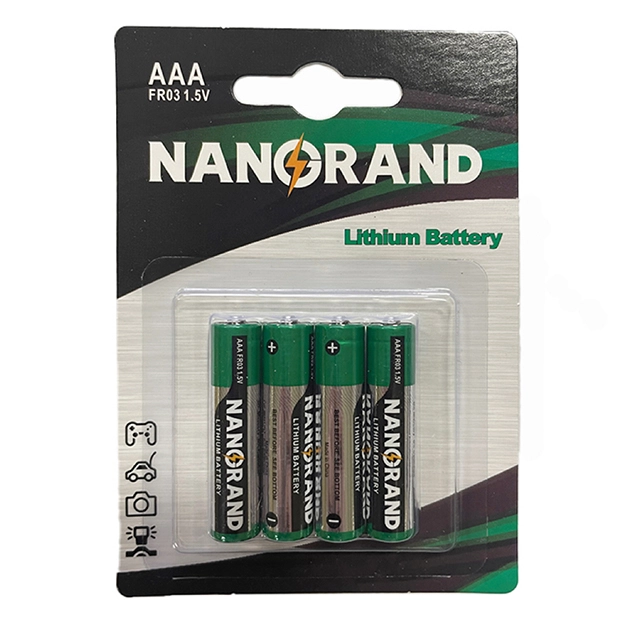
In contrast, Lithium Batteries utilize lithium metal or a specific lithium compound, such as lithium iron disulfide. Engineers favor lithium because it acts as an exceptionally lightweight metal harboring immense energy density. This unique chemical structure directly translates to more stored power packed into the exact same physical dimensions.
Voltage behavior separates premium cells from everyday alternatives. An alkaline cell starts at a nominal 1.5 volts. However, this voltage drops steadily as you drain the cell. If you graph this performance, you see a downward slope. High-drain electronics often require a strict minimum voltage to function properly. Because alkaline voltage slowly fades, these demanding devices frequently report a "low battery" warning prematurely, even when substantial capacity remains inside the cell.
Lithium chemistry solves this fading issue. These cells hold their peak voltage in a flat, consistent line right up until the end of their life cycle. Your devices receive maximum power continuously. When the cell finally depletes, it shuts off abruptly rather than fading out. This flat discharge curve ensures motors run at full speed and wireless signals stay strong until the absolute last second of power.
We can look at specific form factors to illustrate true energy density. The ubiquitous rectangular 9V battery provides a perfect comparison model. To build a standard 9V alkaline version, manufacturers combine six individual 1.5V cylindrical cells inside the rectangular casing. This internal architecture yields roughly 600mAh of total capacity.
A 9V lithium cell uses a radically different internal design. Engineers pack just three high-density 3V cells inside the casing. This highly efficient internal layout yields up to 1200mAh of capacity. It drastically alters both weight and available power. You get double the capacity while simultaneously reducing the physical mass you have to carry.
You cannot make an informed choice without first establishing the threshold between low-drain and high-drain electronics. Low-drain devices draw power intermittently. They pull very low milliamperes over extended periods. Wall clocks, television remotes, and basic digital thermometers fall perfectly into this category. They sip power slowly.
High-drain electronics pull continuous, heavy power. Devices incorporating motorized parts, bright LED flashes, or continuous wireless transmission push power cells to their limits. Digital cameras, smart home deadbolts, and professional audio recorders rapidly deplete standard cells because they demand high current instantly.
Most modern electronics require multiple cells running in series to achieve necessary operating voltages. This configuration introduces the "wood-barrel effect." Just like a wooden barrel holds only as much water as its shortest stave, a series circuit only performs as well as its weakest cell.
When you run multiple Alkaline Batteries in series, slight variations in manufacturing cause them to discharge unevenly. One weak battery drags down overall performance quickly. More importantly, the stronger cells can force the weak cell into a deep discharge state, which reliably triggers catastrophic leakage. Lithium equivalents maintain superior internal consistency across multiple cells, virtually eliminating this hazardous imbalance.
Industry benchmarks show lithium dramatically outlasting everyday variants during continuous use. Field tests reveal startling performance gaps. Consider professional event production. Sound engineers running wireless microphones typically squeeze just 1 to 2 hours of reliable transmission from standard alkaline cells. Swapping those for lithium variants pushes continuous uptime to 3 to 5 hours. This massive extension prevents live audio failures and reduces the sheer volume of spare gear technicians must carry.
Alkaline leakage remains a prominent threat to sensitive electronics. Modern manufacturing regulations eliminated mercury from consumer cells, greatly improving basic safety. However, the internal potassium hydroxide electrolyte remains highly caustic. When alkaline cells sit in long-term storage or suffer over-discharge, they produce hydrogen gas. This pressure eventually ruptures the casing, spilling corrosive fluid directly onto sensitive metal contacts.
This leakage destroys expensive gear. A ruined smart thermostat or a corroded tactical flashlight demonstrates the severe operational risk of leaving everyday cells inside stored electronics. Upgrading chemistry offers peace of mind; advanced cells boast failure rates under 1%, virtually guaranteeing your hardware stays safe.
Environmental conditions dictate power reliability. Standard alkaline options operate optimally within a very narrow temperature band, usually around 20°C to 25°C. When exposed to freezing winter weather, the internal chemical reaction slows to a crawl. The internal resistance spikes, rendering the cell useless until you warm it back up.
Premium alternatives are specifically engineered to function reliably in extreme temperatures ranging from -25°C up to 45°C. This exceptional temperature resilience makes them absolutely essential for specific applications:
Outdoor security cameras monitoring properties in winter
Emergency survival gear stored in uninsulated vehicle trunks
Aviation headsets exposed to rapid cabin temperature shifts
Professional photography equipment used during extreme weather shoots
Weight serves as a crucial evaluation metric for modern portable gear. Because lithium is an inherently lightweight element, these power cells generally weigh 30% to 50% less than their traditional counterparts. This dramatic weight reduction profoundly impacts wearable technology. Carrying a headlamp loaded with heavy alkaline units causes neck strain over time. Shaving ounces off portable medical monitors, handheld GPS units, and backpacking equipment greatly improves long-term user comfort.
Long-term storage capabilities separate everyday supplies from emergency preparedness gear. All power sources slowly lose charge while sitting on a shelf, a process known as self-discharge. Basic household cells generally degrade entirely within 5 to 10 years, depending on humidity and ambient temperature.
Premium lithium options feature incredibly low self-discharge rates. High-quality cells can hold their charge in dry storage for up to 20 years. This exceptional shelf life makes them the only logical choice for emergency weather radios, trauma kits, and fire alarms. You can install them and trust they will work perfectly a decade later.
We must address the ecological footprint of consumer power sources. Manufacturing single-use alkaline cells requires significant industrial energy, leading to higher baseline CO2 emissions. Because they deplete quickly in high-drain devices, consumers throw them away at an alarming rate. Most of these discarded units end up directly in municipal landfills, contributing to massive solid waste accumulation.
Conversely, the lithium recycling industry is rapidly developing a viable "circular economy." Specialized recycling facilities now process depleted units to recover valuable raw materials. Technicians crush the cells to extract a substance called "black mass." This crucial compound allows manufacturers to recover and reuse cobalt, nickel, and manganese. Transitioning toward highly recyclable chemistries drastically reduces mining demands and lessens long-term environmental degradation.
You need a concrete strategy for matching device requirements to chemical compositions. Do not rely on guesswork. Use this framework to audit your gear.
| Criteria | Alkaline Deployment | Lithium Upgrade |
|---|---|---|
| Target Devices | TV remotes, wall clocks, standard flashlights, basic children's toys, digital scales. | Smart door locks, outdoor security cameras, professional audio, portable medical devices. |
| Power Draw | Low-drain, intermittent usage. | High-drain, continuous, or motorized usage. |
| Environment | Strictly indoor, climate-controlled rooms (20°C to 25°C). | Outdoor extremes, uninsulated spaces, freezing temperatures (-25°C to 45°C). |
| Storage Plan | Used immediately or stored for less than 5 years. | Emergency kits requiring up to 20 years of reliable shelf life. |
| Rationale | Low power draw means the cell will likely reach its natural shelf life before draining completely. | Requires consistent high voltage, lightweight portability, and zero-leakage guarantees. |
Do not default to standard alkaline for every single electronic device you own. You must match the battery chemistry to the device's operational criticality and specific power demands. By understanding voltage curves and leakage risks, you can safeguard your expensive equipment.
We highly recommend conducting a complete inventory of your household or business electronics. Categorize your devices by their drain type before making bulk purchasing decisions. Relegate basic household chemistries to remote controls and clocks. Upgrade your smart locks, outdoor sensors, and emergency gear to advanced lithium chemistry. Making this strategic shift guarantees your critical electronics remain powered, protected, and ready when you need them most.
A: No, this is a common myth. Cold environments can actually cause condensation to form inside the casing when you take it out, increasing the risk of short-circuiting and internal rust. You should store them in a dry, room-temperature environment inside their original packaging.
A: We strongly advise against mixing chemistries. They possess vastly differing voltage curves and internal resistances. Mixing them causes the weaker cell to rapidly over-discharge, which frequently triggers severe chemical leakage and ruins your device.
A: No. While basic alkaline is generally deemed safe for standard household trash in many regions, lithium poses a strict fire hazard. Puncturing or crushing them in garbage trucks can cause violent thermal runaway. You must take them to designated hazardous waste recycling centers.


