- All
- Product Name
- Product Keyword
- Product Model
- Product Summary
- Product Description
- Multi Field Search


Views: 0 Author: Site Editor Publish Time: 2026-08-17 Origin: Site


Replacing a dead coin cell battery often leads to confusion when faced with nearly identical options. You pop open your car key fob or watch, only to find a tiny silver disk staring back at you. While CR2016, CR2025, and CR2032 batteries look similar and share the same voltage, selecting the wrong one causes serious problems. A slight difference in thickness can easily result in device damage, poor connectivity, or premature power depletion. Forcing an incorrect size ruins delicate battery contacts and snaps plastic housings.
We will provide a strict technical breakdown of the dimensional, capacity, and application differences between these three common lithium button battery types. Our goal is to ensure you make a correct and safe replacement every single time. You will learn exactly how to decode standardized battery names. We will also explore the physics of battery compartments and show you how to identify the perfect fit for your hardware.
All three are 3-Volt Lithium batteries with an identical 20mm diameter.
The last two digits dictate thickness: CR2016 is 1.6mm, CR2025 is 2.5mm, and CR2032 is 3.2mm.
Thickness equals capacity: The CR2032 holds roughly 2.5 times the energy (mAh) of a CR2016.
Interchangeability is highly restricted: While a thinner battery might temporarily work in a thicker slot, forcing a thicker battery into a thin slot will physically break the device housing.
Battery names often look like random letters and numbers. However, they follow a very strict standardized nomenclature. The International Electrotechnical Commission (IEC) created this naming standard to eliminate global confusion. Once you understand the formula, choosing the correct replacement becomes effortless.
Let us break down the IEC naming standard piece by piece. First, the letter "C" indicates the internal chemistry. It tells you the battery uses Lithium manganese dioxide. This chemistry provides excellent shelf life and stable power delivery. Next, the letter "R" indicates a round, cylindrical shape. This differentiates it from square or specialized prismatic batteries.
The numbers hold the key to physical dimensions. The first two digits, "20", represent the exact diameter of the cell in millimeters. All three batteries share a uniform 20mm width. Finally, the last two digits represent the precise thickness of the cell. This measurement uses tenths of a millimeter. Therefore, a "16" means 1.6mm thick. A "25" means 2.5mm thick. A "32" translates to 3.2mm thick.
You must also understand the voltage baseline. Confirming the electrical output is crucial for device safety. All three of these batteries operate at a nominal 3V. Their chemistry strictly dictates this electrical pressure. Because they all share this identical 3V output, voltage is never the variable in your purchasing decision. The difference lies purely in physical volume and stored energy.
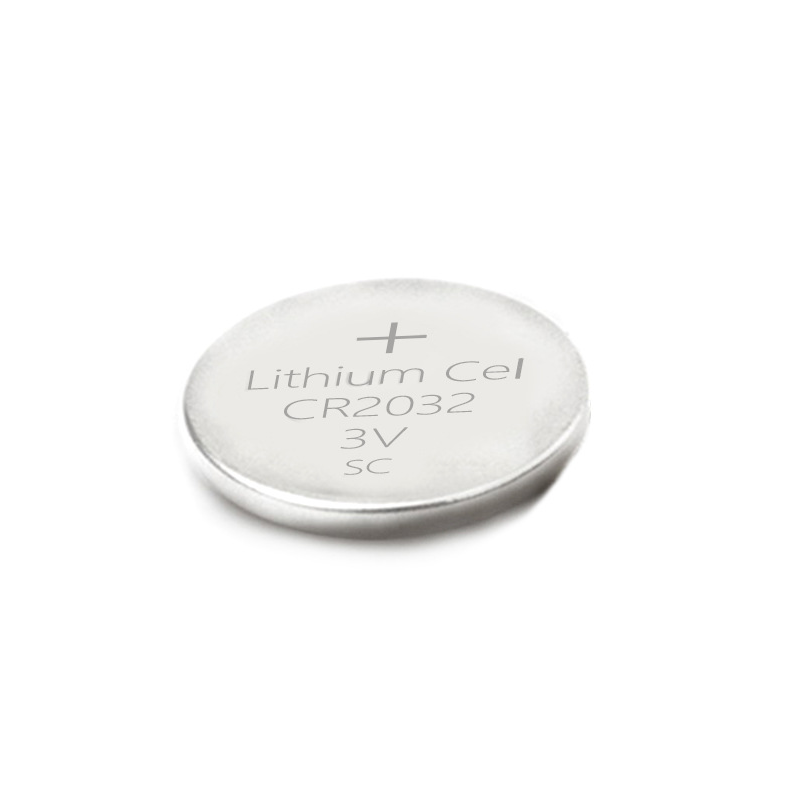
When analyzing CR2016 vs CR2025 vs CR2032 specifications, you must look closely at physical volume. Small changes in thickness completely alter how long a device runs. We can visualize these technical differences using a strict data comparison.
| Battery Model | Thickness (mm) | Nominal Voltage (V) | Typical Capacity (mAh) | Average Weight (g) |
|---|---|---|---|---|
| CR2016 | 1.6 | 3.0 | ~90 | 1.7 |
| CR2025 | 2.5 | 3.0 | ~160-170 | 2.6 |
| CR2032 | 3.2 | 3.0 | ~225-240 | 3.0 |
You will notice a direct, linear relationship between thickness and capacity. In lithium batteries, physical volume directly dictates how much active material fits inside the metal casing. More room for lithium manganese dioxide means higher milliamp-hour (mAh) capacity. This metric measures the total energy reserve.
The CR2016 offers the lowest capacity. It holds roughly 90 mAh. Engineers use this thinnest profile only when space constraints demand it. It sacrifices total runtime for extreme portability.
The CR2025 represents a mid-tier balance. It stores between 160 and 170 mAh. It provides significantly more power than the 2016 without reaching the maximum bulk of the 2032. It bridges the gap perfectly for medium-drain hardware.
The CR2032 offers the highest capacity of the trio. It boasts an impressive 225 to 240 mAh. This cell provides the longest possible runtime. It acts as the undisputed workhorse for electronics requiring enduring reliability over several years.
The CR2016 Lithium Coin Cell Battery features an ultra-slim profile. Manufacturers select this cell for strictly constrained hardware real estate. When millimeters matter, engineers compromise on battery capacity to achieve a sleeker design.
You will frequently find this size in specialized consumer goods. Standard use cases include thin digital watches. You also see them powering slimline pocket calculators. Compact laser pointers frequently rely on them. Additionally, older minimalist car key fobs use this ultra-thin cell to remain unobtrusive in your pocket.
However, this cell comes with strict limitations. It possesses very little internal lithium. Therefore, it depletes rapidly if you place it in high-drain devices. It cannot sustain continuous heavy loads. It works best for devices requiring only brief, intermittent bursts of power.
The CR2025 Lithium Coin Cell Battery serves as a reliable middle-ground solution. It offers a moderate lifespan without adding extreme bulk to the final product. It strikes an ideal balance between longevity and compact physical design.
Manufacturers lean heavily on this size for everyday portable electronics. Standard automotive key fobs frequently specify this cell. You will also find them in modern garage door openers. The medical industry trusts them for diagnostic tools, including many popular blood glucometers. Furthermore, active 3D glasses utilize them to power their rapid shutter mechanisms without making the frames too heavy to wear.
The CR2032 Lithium Coin Cell Battery stands as the true industry workhorse. It dominates the market for devices with continuous micro-draw demands. It excels in any application requiring long-term reliability where changing the cell frequently is highly undesirable.
The standard use cases for this powerhouse are vast. Nearly all PC motherboards use them for CMOS backups. They keep your system clock ticking when you unplug the desktop. Apple AirTags rely exclusively on them to maintain a constant Bluetooth signal. You will also spot them inside professional heart rate monitors. Finally, countless smart home sensors, like window alarms and temperature gauges, depend on their robust mAh capacity to last for years.
Consumers often wonder if they can swap these cells in a pinch. The short answer is usually no. To understand why, we must examine the physics of the battery compartment itself. Device housings use very specific mechanical tolerances. They typically rely on either spring-loaded metal contacts or fixed plastic retaining clips.
Let us look at Risk 1: Upsizing. This involves trying to use a thick CR2032 inside a tight CR2025 or CR2016 slot. A reality check is needed here. It will likely not fit at all. Forcing the battery door closed creates immense physical pressure. You will snap the plastic retaining clips. You will also permanently bend the delicate metal contacts. This permanently ruins the device. Never try to wedge an oversized Lithium Button Battery into a slot meant for a thinner profile.
Now consider Risk 2: Downsizing. This happens when you drop a thin CR2016 into a spacious CR2032 slot. In reality, it may temporarily power the device. This only works if the spring contact can stretch far enough to touch the battery surface. However, the battery will sit loosely inside the tray. It shifts every time you move the device. This shifting causes electrical arcing and random device resets. Furthermore, you will experience a significantly shortened lifespan due to the drastically lower mAh rating.
We must issue a strict safety warning regarding online workarounds. You will often see a "folded aluminum foil" internet hack. People fold foil to fill the empty space when using a thin battery in a thick slot. We advise strictly against this dangerous practice. Loose foil shifts easily. It crosses the positive and negative terminals. This creates an immediate short circuit. It frequently leads to melting plastic and poses a minor fire hazard.
You do not need to guess when replacing these batteries. You can follow a strict diagnostic framework to identify the exact cell your hardware requires. Following these three steps ensures total safety and optimal performance.
Check the Existing Battery: Carefully remove the dead cell. Clean the top surface with a dry cloth. Read the laser engraving on the metal. The engraved IEC code is the most authoritative source of truth.
Inspect the Device Housing: Sometimes the old battery is missing or illegible. Shine a light inside the empty battery tray. Look for debossed text molded directly into the plastic. Manufacturers often stamp the required model number inside the tray or on the removable cap.
Verify with OEM Specifications: If you cannot find any physical clues, do not guess. Consult the original equipment manufacturer (OEM) manual. If you lost the paper copy, search for the digital manual online using the device model number.
The choice between these popular coin cells is not really up to the consumer. While they share identical diameters and voltage, the device manufacturer has already made the choice for you based on physical tolerances and power draw requirements. You must respect the engineering behind the hardware.
Never compromise on thickness merely for the sake of convenience.
Always purchase the exact lithium cell specified by the hardware manual.
Inspect both the old battery engraving and the plastic housing before buying.
Avoid dangerous foil spacing hacks to prevent short circuits and fire risks.
A: Yes, they are functionally identical. The "DL" prefix is simply Duracell’s proprietary naming convention for standard "CR" lithium batteries. A DL2032 has the exact same dimensions, chemistry, and 3V output as a generic CR2032. You can safely swap them without any issues.
A: Certain premium brands, like Duracell, coat their button batteries in a non-toxic bitterant. This terrible-tasting coating prevents children from accidentally swallowing them. However, this invisible layer can interfere with the extremely sensitive electrical contact points inside devices like Apple AirTags. You must buy uncoated batteries for these specific devices.
A: No. They are primary cells, meaning they are designed for single use only. You can never recharge a standard lithium manganese dioxide button battery. Placing them in any form of battery charger poses a severe risk of rupture, chemical leakage, and fire.
A: Absolutely not. Stacking two 1.6mm batteries does equal a 3.2mm physical thickness. However, stacking batteries in series adds their voltages together. Two 3V batteries stacked will push 6 Volts into your device. This massive voltage spike will instantly fry a device designed for 3V.


