- All
- Product Name
- Product Keyword
- Product Model
- Product Summary
- Product Description
- Multi Field Search


Views: 0 Author: Site Editor Publish Time: 2026-08-10 Origin: Site


You open a malfunctioning device and pop out a dead battery. You head online for a quick replacement. Suddenly, conflicting battery codes clutter your screen. You see LR41, AG3, and 392 listed everywhere. This immediate consumer friction causes unnecessary stress. Buyers often feel paralyzed by these confusing replacement codes.
The physical dimensions might look identical across the board. However, these tiny power sources are not fundamentally the same. They share the exact same 7.9mm by 3.6mm footprint. Yet, their internal chemical composition varies wildly. Their voltage discharge curves also behave differently under load. Popping the wrong battery into a precision instrument can cause major issues. Your device might drain rapidly or fail completely.
This article provides a definitive framework for evaluating your options. We will help you decide which specific battery to purchase. You will learn how to match device requirements accurately. We balance performance longevity against cost-efficiency. You will leave knowing exactly how to power your electronics reliably.
Size Equivalency: LR41, AG3, and 392 share the exact same physical footprint (7.9mm diameter, 3.6mm height).
Naming Conventions: "LR41" and "AG3" are functionally identical 1.5V Alkaline button cell batteries, with naming variations tied to regional and manufacturer standards.
Chemistry Differences: The "392" is a 1.55V Silver Oxide battery. It offers a stable voltage curve and longer shelf life compared to alkaline variants.
Interchangeability Rule: While you can physically fit an AG3/LR41 into a device requiring a 392, doing so in precision electronics (like watches) will result in poor performance and shortened lifespan.
Many consumers make a dangerous assumption about small batteries. They assume physical fit guarantees operational compatibility. This is rarely true in battery chemistry. The LR41, AG3, and 392 all utilize a standardized form factor. They measure exactly 7.9 millimeters in diameter. They stand precisely 3.6 millimeters tall. You can easily slip any of them into the same battery slot. The metal contacts will touch perfectly. The device will likely turn on immediately.
However, this standardized size hides a crucial internal difference. The foundational difference lies in the battery chemistry. Manufacturers engineer these cells for entirely different performance profiles. You must look past the outer metal casing. You need to understand what powers the cell inside. The primary division exists between alkaline formulas and silver oxide formulas.
Alkaline cells, like the LR41 and AG3, represent the budget tier. They undergo a gradual voltage drop over time. The power output declines steadily from the moment you install them. They are cheaper to produce and easier to source. Conversely, silver oxide cells like the 392 offer a flatter discharge curve. They maintain an output very close to 1.55V throughout their lifecycle. They only drop in voltage right before complete depletion. They cost more but provide vastly superior leak resistance.
Understanding this baseline categorization is your first crucial step. You must differentiate between a standard 1.5V Alkaline Button Cell Battery and its 1.55V silver oxide counterpart. Making the right choice prevents unnecessary device wear. It also saves you from constantly replacing dead batteries.
You will often see the codes LR41 and AG3 used interchangeably. This happens across online marketplaces and retail packaging. The reason stems entirely from international naming conventions. The "LR" designation comes directly from the International Electrotechnical Commission. The IEC sets global standards for electronic components. In their naming system, the "L" stands for Alkaline chemistry. The "R" stands for a Round shape. The "41" denotes the specific physical dimensions.
The "AG" designation has a different origin. Asian manufacturers predominantly use the AG series. They created this system to categorize their alkaline watch batteries. AG3 is simply their regional equivalent to the LR41. There is no structural difference between the two. They hold the same materials and deliver the same voltage.
We can offer a clear verdict here. An AG3 LR41 Alkaline Button Cell Battery is the exact same product. You will experience no performance difference between them. A battery labeled LR41 works exactly like one labeled AG3. This assumes equal manufacturing quality from the brand you choose. You can buy whichever label offers the better price.
However, you must read labels carefully when buying multipacks. The "AG" series contains wildly varying sizes. For example, buying an AG1 AG3 AG13 Button Cell Battery mixed pack gives you entirely different physical dimensions. An AG1 is much smaller than an AG3. An AG13 is significantly thicker. These are not interchangeable. Always verify the specific number attached to the prefix.
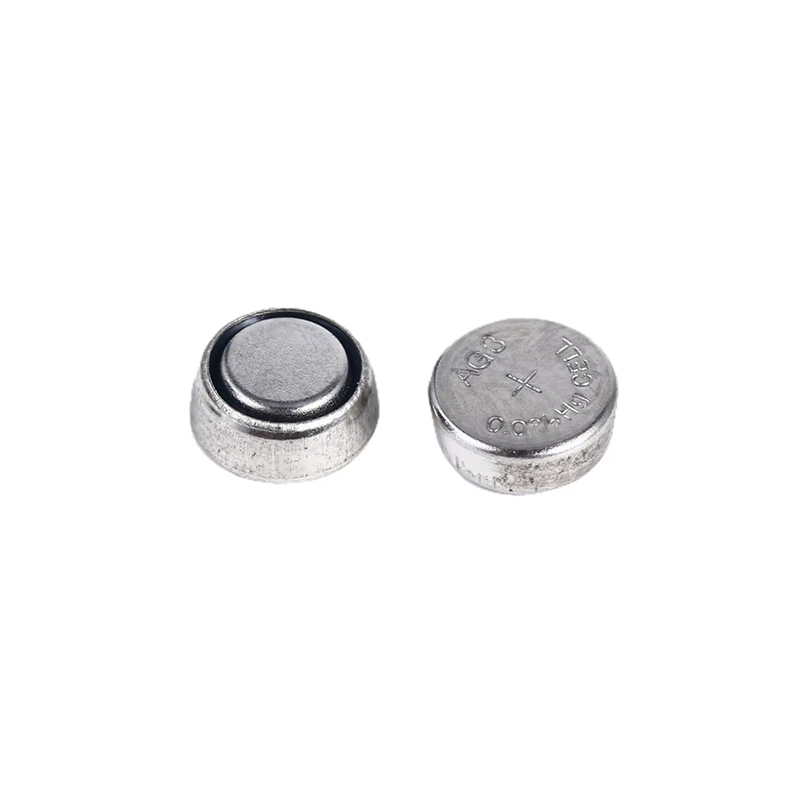
The 392 battery steps away from basic alkaline chemistry. It utilizes a premium silver oxide formulation. This changes its performance profile entirely. A 392 battery delivers a precise 1.55V output. It boasts a remarkably high energy density for its size. Silver oxide chemistry provides an incredibly stable voltage output. It also offers an extended shelf life. You can safely store these cells for three to five years. They will not lose significant capacity during storage.
You might also encounter the number 384. The 384 and 392 share a close relationship. The 392 is designed as a high-drain silver oxide battery. It handles devices requiring sudden spikes of power. The 384 serves as the low-drain equivalent. It works best for devices drawing a tiny, continuous trickle of power. Today, many modern brands simplify this choice. Companies like Energizer often consolidate these variants into a single "384/392" package.
Why should you avoid using an alkaline alternative? Why not just save money? Using an alkaline LR41 in a 392-tuned device carries major risks. Precision quartz watches provide the best example. A watch needs steady voltage to keep accurate time. An alkaline battery drops linearly from 1.5V down to 1.0V. As the voltage slopes downward, the watch mechanism struggles. It begins losing time almost immediately. Eventually, the watch stops entirely, even though the battery still holds some charge.
When searching for a LR41 vs AG3 vs 392 comparison, remember this rule. The 392 holds its 1.55V strength until the very end. It falls off a cliff only when truly depleted. Your quartz watch will run perfectly accurate until the battery dies completely.
| Feature | LR41 / AG3 | 392 / SR41 |
|---|---|---|
| Chemistry | Alkaline | Silver Oxide |
| Starting Voltage | 1.50 Volts | 1.55 Volts |
| Discharge Curve | Sloping (Gradual drop) | Flat (Stable until end) |
| Shelf Life | 1 to 3 Years | 3 to 5 Years |
| Leak Resistance | Moderate | Excellent |
| Best Application | Toys, Novelties | Watches, Medical Devices |
Choosing the right cell depends entirely on your target device. Different gadgets draw power in different ways. Some need short, intense bursts of energy. Others require months of slow, steady power. You must match the battery chemistry to the device's specific behavior.
Alkaline cells excel in low-stakes, disposable, or budget-friendly electronics. You should choose LR41 or AG3 variants for the following use cases:
Children's electronic toys and noise-making books.
Basic laser pointers used for presentations or pet play.
Standard desktop calculators.
Novelty LED flashlights and glowing keychains.
The rationale here focuses on cost-efficiency. These devices use high-drain bursts irregularly. A steady voltage is not critical for an LED light. The light simply dims slightly as the battery drains. Your low replacement cost outweighs the need for multi-year longevity. You can buy alkaline cells in bulk very cheaply.
Silver oxide becomes mandatory when precision and safety matter. You should invest in a 392 cell for these specific use cases:
Precision quartz watches and analog timepieces.
Medical devices like digital thermometers.
Continuous glucose monitors or wearable health trackers.
High-end continuous-use electronics requiring exact calibration.
The rationale centers on reliability. Medical devices require steady, uninterrupted voltage accuracy. A thermometer dropping voltage might give a falsely low reading. Furthermore, silver oxide provides superior leak resistance. You do not want battery acid destroying an expensive timepiece. When your device demands premium performance, always select this specific Button Cell Battery format.
Knowing the theory is great. Applying it during checkout requires vigilance. Online marketplaces present a minefield of misleading listings. You must evaluate every purchase carefully to protect your electronics.
Always check your device manual first. Look for the manufacturer's specific recommendations. They will often state "Use Silver Oxide only." Sometimes they specify "Alkaline accepted." If you lost the manual, check the device battery hatch. Manufacturers frequently engrave the required battery code right into the plastic or metal.
Beware of "equivalency" multipacks sold online. Cheap, unbranded e-commerce listings use aggressive keyword stuffing. They will broadly claim their product replaces "LR41/AG3/392/384" in a single breath. They rarely specify the actual chemistry contained in the package. If a listing claims to be all things, it is almost certainly a cheap alkaline cell. You will pay silver oxide prices for bottom-tier alkaline performance.
Leakage risks present a massive danger. Consumer forums frequently highlight this real-world risk. Cheap alkaline batteries often leak if left unused in a drawer. The internal seals degrade quickly over time. Potassium hydroxide escapes and corrodes the metal contacts. This ruins expensive electronics permanently. Never leave dead alkaline batteries sitting inside your devices.
Brand reliability matters immensely for high-stakes devices. We strongly recommend sticking to verified, established manufacturers. Brands like Energizer, Duracell, Renata, and Maxell utilize rigorous quality control. They seal their batteries better. They test their discharge curves accurately. Their products cost slightly more upfront but save you money by preventing device destruction.
Wash and dry your hands thoroughly before handling a new cell.
Use plastic tweezers instead of metal ones to avoid short-circuiting the battery.
Wipe the battery contacts inside your device using a dry microfiber cloth.
Store unused batteries in their original blister packs at room temperature.
Touching the flat top and bottom faces of the battery simultaneously with bare fingers (this transfers skin oils and impedes connectivity).
Throwing loose button cells into a junk drawer where they touch metal paperclips and drain out.
Ignoring the polarity signs; always ensure the positive (+) side faces the correct direction.
Battery size is just the starting point of your replacement journey. You now understand that a perfect physical fit does not guarantee optimal performance. LR41 vs AG3 vs 392 comparisons always come down to internal chemistry. LR41 and AG3 represent your budget-friendly alkaline options. They work perfectly for simple gadgets, toys, and LED novelties. Meanwhile, the 392 stands as the premium silver oxide requirement. It powers precision instruments and critical medical devices flawlessly.
Your next step is simple. Go check your device's original battery engraving right now. Look at the tiny text printed on the dead cell. Verify the code and match it to your specific usage needs before finalizing any purchase online. Protecting your devices starts with choosing the right power source.
A: Yes, it will physically fit and power the device temporarily. However, the AG3 will die much faster. It may also cause precision devices like watches to malfunction as the alkaline voltage drops continuously. Only use it in emergencies.
A: No. An Energizer 392 uses Silver Oxide chemistry, while an LR41 uses Alkaline chemistry. They fit the exact same battery slot but possess completely different performance characteristics. The 392 lasts longer and maintains steady power.
A: Quartz watches are designed for the flat, steady discharge curve of a Silver Oxide 392 battery. They are not engineered for the sloping, downward discharge of an Alkaline LR41. The watch stops running as the alkaline voltage dips too low.
A: The 392 battery goes by several alternative names depending on the brand. Common equivalents include SR41W, SR736, SB-B1, 280-13, and V392. Always ensure the packaging specifically mentions Silver Oxide chemistry.


