- All
- Product Name
- Product Keyword
- Product Model
- Product Summary
- Product Description
- Multi Field Search


Views: 0 Author: Site Editor Publish Time: 2026-09-01 Origin: Site


Micro-power sources now drive modern technology ecosystems. Our reliance on them expands alongside IoT devices, medical tech, and precision electronics. Experts project billions of new wireless connections will emerge shortly. Selecting the wrong replacement or procurement batch goes far beyond a simple sizing error. It risks sudden device failure, unreliable contact issues, and severe component corrosion. You also face strict safety compliance breaches if you choose poorly.
This article provides a standardized, evidence-based evaluation framework. We decode complex naming conventions and compare distinct chemical properties. You will learn to safely cross-reference a Button Cell for commercial and consumer applications. We outline exact performance metrics and safety standards. Procurement teams and engineers can use these insights directly. You can confidently navigate OEM part numbers and chemistry profiles. We help you maximize device lifespan while avoiding costly hardware damage.
Button cell naming is heavily standardized by the IEC (e.g., CR2032), where letters dictate chemistry and numbers dictate exact physical dimensions.
Voltage stability and discharge curves vary drastically across chemistries; Alkaline (LR) output degrades continuously, while Silver Oxide (SR) maintains a flat, stable voltage until depletion.
Physical similarity does not guarantee interchangeability. Swapping a thinner battery into a thicker slot (e.g., CR2025 into a CR2032 cavity) compromises contact and reduces capacity by up to 40%.
Strict safety standards (bitterant coatings, EU heavy metal restrictions) are critical evaluation criteria for modern procurement.
The International Electrotechnical Commission (IEC 60086-3) naming standard acts as the industry's universal blueprint. It creates a global language for manufacturers, engineers, and consumers. You can decode any compliant battery label once you understand this baseline framework. It eliminates dangerous confusion across different global brands.
The first letter of the standard code dictates the internal chemistry. This single character reveals voltage, overall capacity, and discharge characteristics.
L: Alkaline (1.5V). Common for low-cost, low-drain devices.
C: Lithium Manganese Dioxide (3.0V). Known for high energy density.
S: Silver Oxide (1.55V). Delivers stable voltage for precision instruments.
P: Zinc-Air (1.4V). Relies on oxygen activation for medical tools.
Following the chemistry prefix, the letter "R" typically appears. It stands for round or cylindrical shapes. You will rarely see other shape designations in modern micro-electronics.
Next, the numbers reveal exact physical dimensions. The dimensional math follows a strict, predictable formula.
The first one or two digits represent the diameter in millimeters.
The final two digits represent the height in tenths of a millimeter.
For example, a 2032 code means the unit has a 20mm diameter. It also has a 3.2mm thickness.
You must finally check for drain suffixes. These letters appear at the very end of the code. "W" indicates a high-drain design. It suits devices needing sudden power bursts, like watch backlights or audible alarms. "SW" indicates a low-drain design. It optimizes performance for constant, low-power continuous loads.
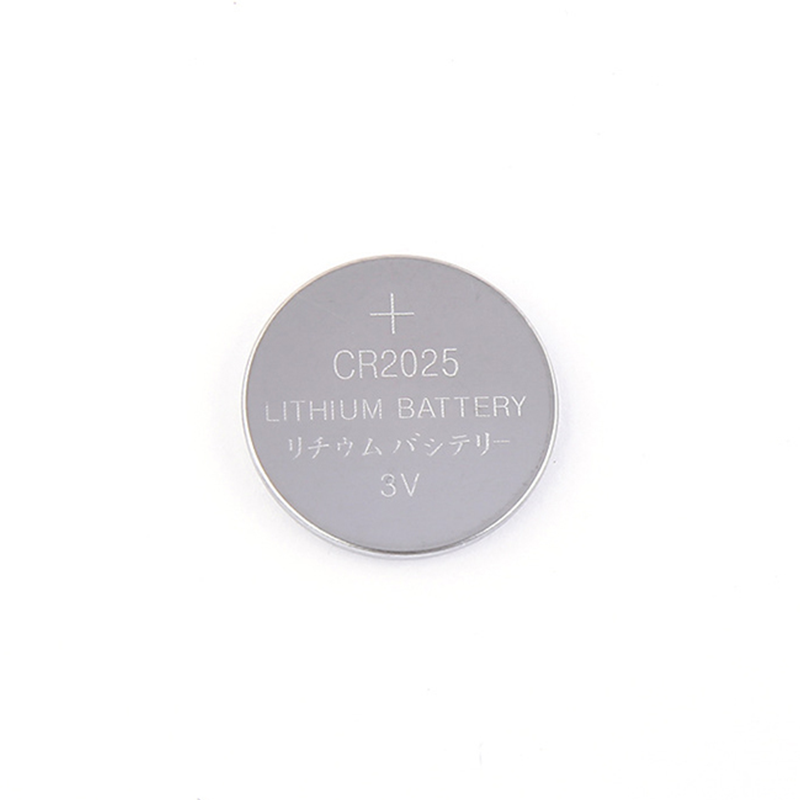
Different chemical makeups serve distinct operational roles. You must evaluate these core chemistries to match your specific hardware requirements.
Specs range from 3V to 3.6V. A Lithium Button Battery provides exceptional energy density. It boasts extreme temperature tolerance. It remains highly resilient in freezing conditions. It also offers an exceptionally long shelf life, often exceeding ten years without losing charge.
Ideal For: Industrial IoT sensors, computer RTC (Real-Time Clock) backups, and high-draw digital devices.
Specs center around 1.5V. An Alkaline Button Cell delivers high cost-efficiency. However, it suffers from a sloping discharge curve. Its voltage drops steadily during active use. It also shows lower performance in extreme temperature fluctuations.
Ideal For: Low-cost, non-critical consumer electronics. This includes calculators and basic children's toys.
Specs sit firmly at 1.55V. It carries a higher cost due to precious metal contents. It delivers a "cliff-edge" flat discharge curve. The unit maintains a strict 1.55V output until the very end of its operational life.
Ideal For: Precision medical instruments and high-end quartz analog watches.
Specs hold at 1.4V. Exposure to ambient oxygen activates the cell. Once unsealed, the internal discharge process cannot pause. It remains highly sensitive to environmental humidity and altitude changes.
Ideal For: Hearing aids and specific continuous-use medical monitors.
| Chemistry | Prefix | Nominal Voltage | Discharge Profile | Typical Shelf Life |
|---|---|---|---|---|
| Lithium | C | 3.0V | Stable / Very High Capacity | Up to 10 Years |
| Alkaline | L | 1.5V | Sloping (Gradual Drop) | 2 to 3 Years |
| Silver Oxide | S | 1.55V | Flat (Cliff-edge Drop) | 3 to 5 Years |
| Zinc-Air | P | 1.4V | Continuous (No Pause) | Weeks (Once unsealed) |
Physical realities of device slots dictate strict sizing requirements. Metal spring contacts inside the slot require firm physical pressure.
Using a physically thinner battery risks intermittent power failures. A thinner profile causes spring-contact disconnects. You will experience sudden power loss when the device moves. Even minor vibrations can break the electrical circuit if you install a mismatched height.
Performance metrics reveal the true cost of sizing compromises. Consider the popular CR2032 and CR2025 models. They share the exact same 20mm diameter. However, the CR2032 adds just 0.7mm of overall thickness. This tiny addition yields an approximate 40% increase in overall milliamp-hour (mAh) capacity. You sacrifice nearly half your operational life if you downgrade thickness.
You must also respect high-drain versus low-drain matching. High-pulse currents demand specific internal resistance levels. Putting low-drain units into high-draw devices triggers rapid voltage drops. This leads to premature depletion or sudden device malfunction. The internal chemistry simply cannot push enough current fast enough. Always verify your device's peak current demand before swapping cells.
Cross-referencing errors create massive headaches for field engineers. You must understand how brands manipulate codes to obscure standard matches.
Brand-specific camouflage causes major procurement confusion. Many manufacturers use proprietary OEM naming conventions. Duracell often uses the "DL" prefix. Energizer prefers the "ECR" prefix. These proprietary codes directly map to the standard IEC "CR" codes. A DL2032 is functionally identical to a CR2032. You must recognize these marketing aliases to avoid overpaying for branded parts.
You will also encounter stubborn industry outliers. The Bulova watch brand serves as the prime exception. Their legacy naming system completely ignores standard standard mappings. A Bulova code offers no clues about chemistry or dimensions. You must use strict cross-reference charts when servicing these specific timepieces.
Unsafe substitutions pose the greatest equipment risk. Many consumers match physical size while ignoring underlying chemistry. Placing a cheap alkaline cell into a precision slot creates severe hazards. For example, an LR44 fits perfectly into a 357/SR44 slot. However, the hardware requires silver oxide stability. The alkaline substitute risks destructive acid leaks over time. It also provides erratic voltage supply, causing precision timing circuits to fail rapidly.
Micro-power units present unique safety challenges for consumers and procurement teams alike. You must integrate safety evaluations into your sourcing strategies.
Health and liability risks demand serious attention. Accidental ingestion remains a critical danger for small children. Alkaline reactions combine rapidly with bodily fluids inside the human esophagus. This creates highly corrosive tissue burns in just a few hours. Medical emergencies happen frequently if storage protocols fail.
Top-tier manufacturers now deploy targeted mitigations. Modern safety implementations include the application of bitterant compounds. Duracell uses a non-toxic bitter coating on many retail cells. This foul-tasting layer actively deters children from swallowing them. Procurement teams should prioritize coated units for consumer-facing products.
Environmental compliance heavily influences modern battery production. Authorities mandate the phase-out of mercury and cadmium in standard cells. You must source compliant units to meet stringent EU and global environmental regulations. Non-compliant stock can trigger sudden customs seizures or massive regulatory fines.
Procurement teams must conduct bulk lifespan evaluations. You should balance shelf-life expectations against volume pricing discounts. Lithium chemistries offer exceptional 10-year stability. They suit long-term warehouse storage perfectly. Alkaline alternatives face much shorter expiration windows. Buying cheap alkaline bulk orders often wastes money if they expire unused. Always buy a reliable Button Battery from certified distributors who guarantee fresh stock.
You need a structured decision matrix when selecting replacement micro-power sources. Your success depends on strict adherence to technical parameters.
Prioritize matching device voltage constraints first to prevent catastrophic hardware damage.
Match the chemical discharge profiles second to ensure stable long-term operation.
Verify the exact physical dimensions third to guarantee secure electrical contact.
Technical buyers and field engineers must avoid visual guessing. Do not rely on physical similarity when approving widespread replacements. Always consult official cross-reference sheets. Check manufacturer specifications before authorizing bulk purchases. This disciplined approach eliminates unsafe substitutions and maximizes device reliability.
A: No. Stacking creates severe physical risks. It leads to uneven voltage distribution across the internal cells. This practice introduces dangerous physical short-circuit hazards. It can trigger overheating or rapid leakage. It is never recommended unless the units are pre-packaged as a factory-welded multi-cell module.
A: Standard LR, CR, and SR cells are completely disposable. You cannot recharge them safely. However, specific rechargeable variants exist. Look for LIR, ML, or VL prefixes. Engineers use these rechargeable types in TWS earbuds and continuous memory backups.
A: Visually identify the larger, slightly raised outer side. It usually features a "+" engraving to mark the anode. The smaller, flat bottom acts as the cathode. You can also verify standard 3V or 1.5V output using a digital multimeter across these two distinct surfaces.
A: No. They share exact physical dimensions, but their internal chemistries differ completely. The LR44 uses alkaline chemistry with a sloping voltage curve. The 357 uses silver oxide chemistry for strict flat-voltage stability. They are not direct equivalents for precision medical or timing equipment.


